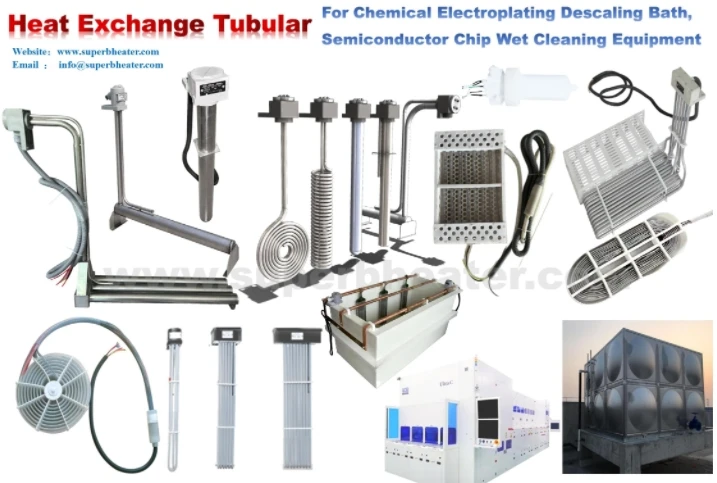
In maintenance-intensive environments, heater removal is not an occasional event-it is routine. A plating facility operating multiple bath chemistries may need to change heaters between production runs to prevent cross-contamination. In certain chemical processes, fouling, scale formation, or polymer buildup requires periodic inspection and cleaning of immersion heaters. When heater extraction involves unbolting flanges, disconnecting hard-wired terminals, and coordinating lifting equipment, downtime quickly becomes expensive.
For maintenance managers and plant engineers, the focus shifts from initial purchase cost to lifecycle efficiency. PTFE immersion heaters, while valued for corrosion resistance and chemical compatibility, should also be specified with maintainability design in mind. Features that enable rapid replacement, safe handling, and minimal process interruption often justify their cost many times over.
Mechanical Connection Options: Flanged vs. Threaded
The mechanical interface between the heater and the tank is the first factor affecting removal time. Traditional bolted flanges provide robust sealing and structural stability but require tools, torque control, and careful reassembly. In systems where heaters are rarely removed, bolted flanges remain practical and economical.
In maintenance-heavy applications, quick-disconnect flange systems offer a clear advantage. Split-ring or clamp-style flanges reduce removal time dramatically. Instead of loosening multiple bolts in a cross-tightening sequence, a technician releases a clamp ring and withdraws the heater assembly. Proper gasket selection remains critical to maintain chemical resistance and leak integrity.
Threaded connections are sometimes used for smaller heaters, but they introduce limitations. Threads can seize in corrosive environments, and repeated installation cycles increase wear risk. For applications requiring frequent rapid replacement, flanged designs-particularly those incorporating quick-release clamps-provide greater repeatability and reliability.
In practice, for tanks where heaters are changed weekly, investing in cam-lock style flanges or clamp-ring designs pays for itself in the first year through reduced labor hours and shorter production interruptions.
Electrical Connections: From Hard-Wired to Plug-and-Play
Electrical disconnection often consumes more time than mechanical removal. Hard-wired terminal boxes require lockout procedures, conduit disassembly, and careful reconnection during installation. Wiring errors and torque inconsistencies introduce additional risk.
Specifying plug-and-play connectors significantly enhances maintainability. Industrial-grade, waterproof electrical connectors rated for the process environment allow heaters to be unplugged quickly once power is isolated. Multi-pin connectors with keyed orientation prevent misalignment and reduce commissioning errors.
High ingress protection ratings (IP67 or higher) are recommended for wet process areas. Connector materials must resist chemical vapors common in plating and chemical processing facilities.
For installations with multiple identical heaters, standardized plug-and-play connectors allow maintenance teams to swap units in minutes. Electrical compatibility across units eliminates rewiring, simplifies documentation, and reduces training requirements.
Lifting Aids and Ergonomic Considerations
PTFE immersion heaters for industrial tanks can be long and awkward to handle. Without dedicated lifting features, removal may require improvised rigging, increasing the risk of injury or equipment damage.
Specifying built-in lifting eyes or handles improves safety and efficiency. Properly positioned lifting points maintain balance during extraction, preventing contact with tank walls or internal components. For heavier assemblies, lifting lugs compatible with facility hoists or overhead cranes streamline removal.
When overhead clearance is limited, design coordination becomes critical. Heater length and removal trajectory should be evaluated during specification to ensure adequate space for vertical extraction. In shallow tanks, horizontal withdrawal paths may be required, which further emphasizes the importance of lightweight construction and stable lifting points.
Ergonomic design contributes directly to reduced downtime. Faster, safer handling translates to shorter maintenance windows and fewer personnel required for the task.
Interchangeable Spares and Standardization
A common time-saver is specifying heaters with identical mounting dimensions so a spare can be swapped in minutes without any piping modifications. Interchangeable spares eliminate custom fitting during emergencies and allow a single spare inventory to support multiple tanks.
Standardization includes consistent flange patterns, insertion lengths, watt densities, and connector types. Even when tanks operate at slightly different temperatures, harmonizing heater designs simplifies maintenance logistics.
Facilities with multiple identical tanks benefit significantly from interchangeable spares. A standardized quick-disconnect heater platform allows a single spare unit to serve multiple positions, reducing capital tied up in inventory while maintaining operational flexibility.
Trade-Offs and Cost Considerations
Quick-disconnect features add upfront cost. Clamp-style flanges, industrial connectors, and lifting hardware increase material and fabrication complexity. However, the cost of downtime often outweighs incremental hardware expense.
A heater that requires two hours of labor for removal and reinstallation may disrupt production schedules, delay cleaning cycles, or extend shutdown periods. Reducing that time to 20–30 minutes through improved maintainability design delivers measurable savings over the equipment's lifetime.
Maintenance frequency should guide specification decisions. For heaters removed annually, standard bolted connections may suffice. For weekly or monthly maintenance cycles, quick-disconnect features provide substantial lifecycle benefits.
Additional Specification Guidance
When defining requirements for PTFE immersion heaters intended for rapid replacement, consider:
Maintenance interval expectations (weekly, monthly, annual).
Availability of lifting equipment and clearance constraints.
Environmental exposure affecting connector and flange materials.
Requirement for backup heaters and spare inventory strategy.
Standardization across tanks to enable interchangeable spares.
Collaboration between process engineering and maintenance teams during design review ensures that removal procedures are evaluated before equipment installation. Simulated extraction planning during layout design prevents future access limitations.
Conclusion
Frequent maintenance does not have to translate into extended downtime. PTFE immersion heaters can be specified with quick-disconnect mechanical connections, plug-and-play connectors, integrated lifting aids, and standardized dimensions that enable rapid replacement.
Designing for maintainability is an investment that pays dividends each time service is performed. For facilities operating multiple similar tanks, implementing a standardization program with interchangeable, quick-disconnect heaters allows a single spare to support many positions. The result is reduced labor, improved safety, minimized inventory, and greater operational flexibility-outcomes that directly support efficient, high-uptime process operations.