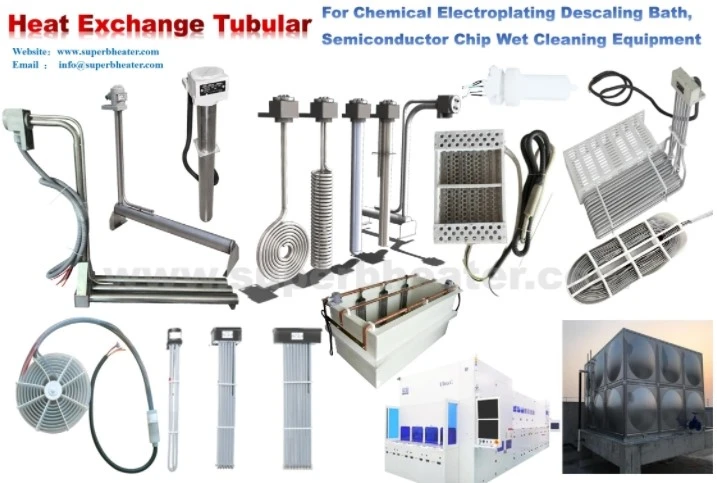
Corrosion-resistant PFA electric heating tubes operate under dynamic industrial conditions where process demands, fluid temperature, and operating schedules frequently change. The electrical load applied to the heating element rarely remains constant. Instead, it fluctuates according to control signals, temperature feedback, and production requirements.
Electrical load variation refers to changes in current, voltage, or effective power input over time. These variations directly influence thermal output, surface temperature stability, and mechanical stress within the heating structure. Understanding how load fluctuations affect system performance is essential for maintaining reliable and efficient operation.
Relationship Between Electrical Load and Thermal Output
The heat generated by a resistance heating element is proportional to the electrical power applied. When electrical load increases, thermal output rises accordingly. When load decreases, heat generation drops.
Frequent or abrupt changes in electrical load produce corresponding fluctuations in surface temperature. Rapid increases in power may cause sudden temperature spikes, while rapid decreases may result in temporary cooling.
Stable heating performance requires controlled and gradual load adjustments rather than abrupt transitions. Smooth regulation reduces thermal shock and protects the PFA coating from excessive stress.
Impact on Thermal Expansion and Material Stress
When electrical load increases sharply, the heating element and surrounding layers experience rapid temperature rise. This causes expansion of internal components at different rates depending on material properties.
If load variations occur frequently, repeated expansion and contraction cycles generate mechanical fatigue inside the heater structure. The PFA coating, metallic core, and insulating layers may experience differential movement.
Over time, this cyclic stress can weaken bonding interfaces or create microcracks. Maintaining gradual load variation reduces mechanical fatigue and enhances structural integrity.
Controlled electrical adjustment minimizes stress accumulation.
Effect on Surface Temperature Stability
Surface temperature stability is strongly influenced by how consistently electrical load is applied. Large fluctuations in load directly translate into unstable surface heating conditions.
In systems with strong load variation, temperature may oscillate around the target value. Such oscillation increases thermal stress and reduces process consistency.
Stable electrical input allows the heater to maintain a more uniform surface temperature. Consistent temperature improves heat transfer efficiency and reduces the risk of localized overheating.
Reliable load regulation enhances thermal control precision.
Influence on Power Supply Components
Frequent load changes place stress on electrical components such as relays, contactors, solid-state switches, and transformers. Sudden high-current switching increases electrical wear and may generate voltage spikes.
In systems experiencing rapid load variation, switching devices operate more frequently, accelerating component aging. Increased switching frequency also raises the probability of transient electrical disturbances.
Using advanced control systems such as proportional regulation or pulse-based modulation reduces abrupt transitions and protects power supply infrastructure.
Electrical stability depends on intelligent load management.
Interaction With Fluid Temperature Feedback
Most modern heating systems use temperature sensors to adjust electrical load automatically. When fluid temperature drops, the controller increases power; when temperature rises, power decreases.
However, poorly tuned control systems may overreact to minor temperature deviations, causing excessive load oscillation. This instability results in repeated power surges and drops.
Proper calibration of control parameters ensures that load adjustments occur smoothly and proportionally to actual process needs. Well-tuned feedback loops maintain steady heating performance.
Accurate sensor integration improves load stability.
Effect on Energy Efficiency
Electrical load variation influences overall energy consumption. Frequent high-power bursts followed by shutdown cycles often reduce efficiency because energy is not delivered in a continuous and optimized manner.
Stable load operation allows the heater to run closer to its optimal efficiency range. Continuous moderate power input often achieves better thermal distribution than repeated peak-and-off cycling.
Reducing unnecessary load fluctuations lowers energy waste and improves long-term operational cost performance.
Energy efficiency improves with balanced electrical regulation.
Impact on Thermal Stress During Startup and Shutdown
Startup and shutdown phases typically involve significant load changes. Rapid application of full electrical power during startup can create steep temperature gradients inside the heater structure.
Similarly, sudden power removal during shutdown may cause abrupt cooling. Both scenarios generate mechanical stress due to fast thermal transitions.
Gradual ramp-up and ramp-down strategies reduce stress intensity. Controlled load variation during these transitions protects the PFA coating and internal components from thermal shock.
Smooth transition management strengthens durability.
Influence on System Lifetime
Systems that experience extreme or uncontrolled electrical load fluctuations often exhibit shorter service life. Mechanical fatigue, insulation degradation, and electrical component wear accumulate over repeated cycles.
By contrast, systems with well-managed load variation demonstrate more stable thermal behavior and reduced structural stress.
Long-term reliability improves when load adjustments follow controlled algorithms and operate within safe design limits.
Predictable load management extends operational lifespan.
Coordination With Power Density and Heater Design
Electrical load variation must be evaluated alongside power density and structural design. High power density systems may be more sensitive to load fluctuations because temperature changes occur rapidly.
Lower power density designs typically exhibit slower thermal response and reduced sensitivity to abrupt load changes.
Engineers should align electrical control strategy with heater geometry and material limits to achieve balanced performance.
Integrated design optimization improves stability.
Importance of Smart Control Technology
Modern heating systems increasingly incorporate intelligent controllers capable of monitoring temperature, current, and voltage in real time.
Smart control algorithms adjust electrical load gradually rather than abruptly. Some systems implement predictive regulation to anticipate temperature changes before they occur.
Advanced monitoring also detects abnormal load patterns that may indicate insulation damage or electrical faults.
Automation enhances safety and minimizes unstable load conditions.
Engineering Best Practices for Managing Load Variation
To improve system stability under variable electrical load conditions, engineers often adopt the following practices:
Implement soft-start and soft-stop control mechanisms
Use proportional-integral-derivative (PID) regulation for smooth adjustment
Install reliable temperature and current monitoring sensors
Avoid sudden full-power activation unless necessary
Design power supply capacity with safety margins
These measures reduce stress caused by uncontrolled electrical transitions.
Proactive control strategies enhance operational reliability.
Conclusion
Electrical load variation plays a critical role in determining thermal stability, mechanical stress, and energy efficiency in corrosion-resistant PFA electric heating systems. Sudden or frequent load fluctuations increase thermal gradients, accelerate component wear, and reduce long-term reliability.
Controlled and gradual load management ensures stable surface temperature, protects insulation layers, and improves system efficiency. Intelligent power regulation combined with proper system design significantly enhances operational safety.
In industrial heating applications, optimizing electrical load behavior is essential for maintaining consistent performance and extending equipment service life.