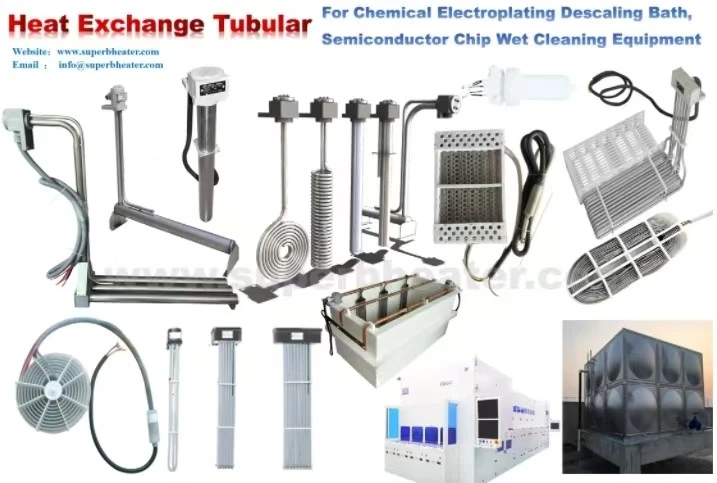
From the perspective of installers and plant engineers in chemical processing facilities, the successful deployment of immersion heaters hinges on meticulous attention to detail during installation. Even the most robust and high-quality heater can underperform, leading to inefficiencies, premature failures, or safety hazards, if not properly integrated into a chemical tank. Harsh chemical environments amplify these risks, where improper fitting can result in leaks, corrosion at interfaces, or uneven heating that disrupts process consistency. Based on field experience, overlooking basic compatibility checks often leads to costly rework, emphasizing the need for a systematic approach to ensure longevity and reliability in demanding applications like acid baths, solvent heating, or reaction vessels.
Pre-Installation Checks: Ensuring Compatibility from the Start
Before any immersion heater is mounted, a series of essential verifications must be conducted to align the equipment with the tank and process specifications. Flange ratings represent a foundational check; these must match the tank's pressure and temperature capabilities to prevent structural failures under operational loads. For instance, ANSI-rated flanges are common in industrial setups, but deviations in bolt patterns or pressure classes can compromise the seal integrity.
Thread compatibility follows closely, particularly for screw-plug or threaded immersion heaters. Mismatched NPT (National Pipe Thread) or BSP (British Standard Pipe) threads can lead to cross-threading, leaks, or stripped connections, exacerbating exposure to corrosive fluids. Based on field experience, measuring thread pitch and diameter with precision tools prior to assembly avoids these pitfalls, especially in retrofit scenarios where older tanks may have non-standard fittings.
Immersion length is another critical factor, dictating how effectively the heater transfers energy to the fluid. Too short a length risks inadequate submersion, promoting dry-firing and element burnout, while excessive length can cause sediment buildup or mechanical interference with tank internals. Calculations should account for fluid level fluctuations, ensuring the active heating zone remains fully immersed during normal operations.
Selecting the Right Gaskets and Seals: Safeguarding Against Leaks and Corrosion
The choice of gasket and seal materials stands as a pivotal element in Teflon immersion heater installation and overall system integrity. These components must withstand the chemical aggressiveness of the process fluid while maintaining a secure bond at the heater-tank interface. Common options include Viton for hydrocarbon resistance, EPDM for water-based solutions, or PTFE (Teflon) for broad-spectrum chemical inertness.
Incompatibility here can lead to swelling, degradation, or outright failure, allowing fluid ingress that corrodes electrical junctions or contaminates the process. Based on field experience, testing seal materials in simulated conditions-such as immersion in the target fluid at operating temperatures-reveals potential weaknesses early. For heaters with flanged mounts, compressed fiber or spiral-wound gaskets may be appropriate, but in highly corrosive setups, Teflon envelopes provide superior protection by encapsulating more vulnerable core materials.
Installation Best Practices: Minimizing Mechanical Stress and Enhancing Durability
Proper installation techniques are essential to avoid imposing undue mechanical stress on heating elements, which can manifest as bending, vibration-induced fatigue, or thermal expansion issues. Elements should be aligned straight and supported adequately, especially in longer configurations, to prevent sagging or contact with tank walls. Torque specifications for flanges and plugs must be followed precisely-over-tightening can distort seals, while under-tightening invites leaks.
In vertical installations, positioning the heater at the tank bottom or side minimizes air pockets, but provisions for drainage and cleaning access are necessary. Based on field experience, incorporating flexible conduits for electrical connections accommodates tank movements or vibrations, reducing strain on terminals. Additionally, ensuring uniform fluid flow around the elements through baffles or agitators prevents hot spots and promotes even heat distribution.
Material Comparisons: Why Teflon-Based Heaters Excel in Chemical Applications
When comparing sheath materials for immersion heaters, the selection profoundly influences installation success and long-term performance. Stainless steel offers good general resistance but falters in chloride-rich or highly acidic environments, where pitting corrosion at the flange-tank interface can compromise seals. Incoloy provides enhanced high-temperature capabilities, yet it may require specialized gaskets to handle oxidative agents.
Teflon-based heaters, however, are frequently specified for their exceptional advantages in Teflon immersion heater installation scenarios. The PTFE coating not only imparts broad chemical resistance-enduring pH extremes from 0 to 14 and temperatures up to 250°C-but also facilitates seal compatibility by presenting a non-reactive surface. This minimizes galvanic corrosion at interfaces and reduces the risk of gasket degradation from fluid interactions. In contrast to metal sheaths, Teflon's low-friction properties ease insertion and removal during maintenance, while its anti-fouling characteristics prevent scale buildup that could stress elements mechanically.
Titanium represents another premium option for halide resistance, but its higher cost and potential for crevice corrosion in certain chemistries make it less versatile than Teflon in mixed-fluid processes. Based on field experience, Teflon immersion heaters consistently outperform in applications like electroplating or pharmaceutical mixing, where seal integrity at the flange is paramount to preventing leaks and ensuring compliance with safety standards.
Cautionary Notes: Addressing Dry-Fire Risks and Electrical Grounding
No installation guide is complete without addressing potential hazards like dry-firing, where heaters operate without sufficient fluid coverage, leading to rapid overheating and element failure. Integrating level sensors or low-liquid cutoffs is advisable, particularly in batch processes with variable fill levels.
Electrical grounding demands equal vigilance; improper grounding in conductive chemical environments can invite electrolytic corrosion or shock hazards. Based on field experience, using grounded enclosures and verifying continuity with multimeters during setup mitigates these risks, aligning with NEC (National Electrical Code) requirements.
Summary: Installation as the Foundation of Safety and Performance
Proper installation of immersion heaters in chemical processes forms the cornerstone of both safety and operational performance, transforming potential vulnerabilities into reliable assets. By adhering to pre-checks, material selections, and best practices, facilities can achieve leak-proof systems that withstand harsh conditions. In complex setups involving multiple heaters or non-standard tank geometries-such as elongated vessels or those with internal partitions-detailed mounting diagrams and custom hardware, like reinforced flanges or spacer kits, are often essential. This tailored approach ensures uniform heating, minimizes stress points, and upholds process integrity, ultimately supporting uninterrupted production in B2B chemical operations.