As an engineer responsible for maintaining operations in a chemical processing plant or wastewater treatment facility, confronting an aging heating system in a corrosive environment can feel daunting. The immersion heaters are pitted and scaled from years of exposure to aggressive acids or saline solutions, energy bills are climbing due to prolonged heat-up times, and unexpected failures disrupt production. Yet, a complete overhaul of the tank or process line isn't viable-budget constraints, space limitations, or minimal downtime windows make it impractical. Retrofitting becomes the strategic path forward, focusing on targeted upgrades that restore reliability and efficiency without tearing everything apart. According to retrofit case studies in electroplating and fine chemical sectors, such approaches can cut energy use by 25–40% while extending system life threefold.
Systematic Evaluation of Current System Performance
The retrofit process begins with a thorough assessment of the existing setup's shortcomings. Start by identifying the primary failure modes: corrosion that thins the sheath, allowing leaks or electrical shorts; scaling from mineral-laden fluids that insulates the surface; or fouling from organic residues that blocks heat flow. Document these visually and through performance logs-note hotspots, uneven temperatures, or frequent element replacements. Simultaneously, establish an energy consumption baseline by metering power draw during typical cycles. Compare this to original design specs; discrepancies often reveal how degradation has inflated usage. For instance, a corroded stainless steel heater might require 30% more input to achieve the same output due to reduced surface area and increased thermal resistance.
This diagnostic phase uncovers hidden inefficiencies. In corrosive applications, where fluids like hydrochloric acid or chromic acid baths accelerate metal breakdown, the system may be overworking to compensate for lost heat transfer capacity. Quantify this by calculating the overall heat transfer coefficient (U-value) before and after cleaning a sample element-if it's dropped significantly, fouling and corrosion are confirmed culprits.
Material Upgrades for Enhanced Efficiency
Once the baseline is set, evaluate how upgrading materials can directly boost energy performance. Traditional metal sheaths, while initially cost-effective, degrade over time in corrosive settings, forming rust or oxide layers that act as insulators. Even a thin film can slash heat transfer rates by 20–50%, forcing longer run times and higher energy demands.
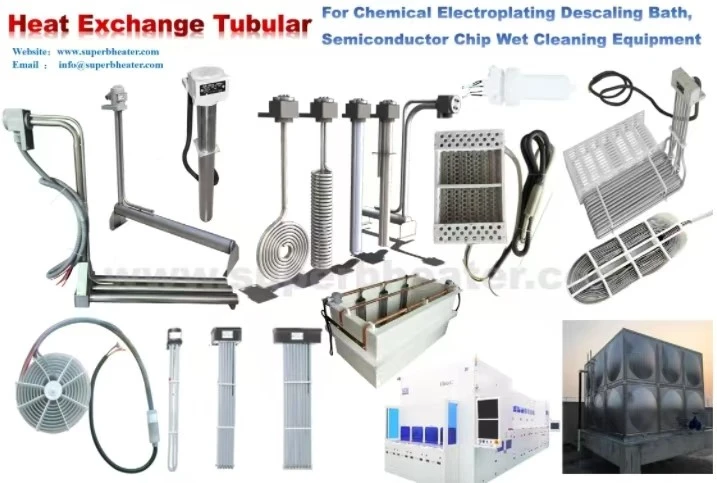
Replacing these with corrosion-proof Teflon (PTFE) electric heating tubes offers immediate gains. PTFE's chemical inertness resists attack from most acids, alkalis, and salts, preventing the pitting and scaling that plague metals. More crucially, its non-stick surface minimizes fouling adhesion, ensuring cleaner operation and sustained heat flux. In retrofit scenarios, this swap eliminates the thermal barrier caused by accumulated rust and mineral scale, restoring near-original transfer efficiencies. According to retrofit case studies in pharmaceutical and metal finishing plants, facilities switching to Teflon-coated tubes reported 15–30% drops in energy consumption within the first year, as heaters no longer needed to overheat to push energy through degraded surfaces.
Optimizing Power Sizing and Control Strategies
Beyond materials, the retrofit presents an opportunity to right-size heating capacity and refine controls. Aging systems are often oversized to account for initial inefficiencies, leading to wasteful cycling or overshoot. Reassess the actual heat load based on current process demands-factors like fluid volume, flow rates, and ambient losses may have changed since installation.
Integrate modern controls, such as PID controllers with sheath temperature sensors, to prevent unnecessary power spikes. In corrosive environments, where precise temperatures avoid side reactions or evaporation losses, this precision enhances efficiency. Pairing Teflon tubes with lower watt densities (e.g., 10–20 W/in²) further reduces fouling propensity, as cooler surfaces discourage scale formation.
Step-by-Step Retrofit Checklist
A structured checklist guides the evaluation and implementation to ensure comprehensive coverage.
Inspect existing elements and controls first: Remove and examine heaters for damage, test thermostats for accuracy, and check wiring for corrosion-induced resistance.
Conduct fluid chemistry analysis next: Sample the process medium for pH, conductivity, and contaminants to confirm compatibility with new materials like PTFE, avoiding surprises like fluoride attack.
Calculate actual versus design heat load: Use operational data to model required wattage, factoring in insulation improvements or process tweaks that could downsize the system.
Select retrofit-friendly components that match existing footprints: Opt for drop-in replacements like flanged or screw-plug Teflon tubes to minimize modifications, ensuring quick installation during scheduled shutdowns.
Summary: Balancing Reliability and Efficiency in Retrofitting
A thoughtful retrofit in corrosive applications tackles both overt material failures and subtle inefficiencies, transforming an unreliable system into a streamlined asset. By prioritizing diagnostics, material upgrades, and optimization, engineers can achieve substantial energy savings without extensive disruption. For complex systems-such as interconnected tanks in specialty chemical production or precise thermal profiles in bioprocessing-a phased retrofit plan, developed with application expertise from manufacturers, maximizes return on investment. This might involve pilot-testing one heater bank before full rollout, yielding benefits through reduced energy costs, lower maintenance, and minimized downtime.