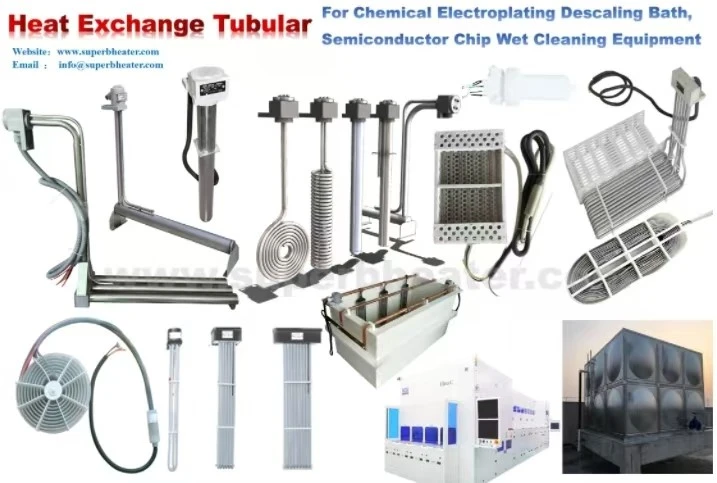
Titanium heating jacket assemblies are widely installed on reaction kettles, storage tanks and continuous production pipelines to provide stable process temperature control. In batch industrial production, frequent startup and shutdown, intermittent heating and cooling, as well as raw material feeding leading to sharp medium temperature fluctuation, subject titanium heating jackets to repeated alternating thermal cycling loads. Periodic thermal expansion and contraction generate cyclic alternating thermal stress at welding seams, structural transition corners, flange connection roots and local restraint fixed positions. Long-term accumulated thermal fatigue will induce surface slip bands and microcrack initiation on titanium substrates; once these tiny defects contact chloride-containing or acidic process fluids, thermal fatigue cracks will propagate rapidly under the coupling effect of cyclic stress and localized corrosion, eventually causing jacket rupture, heat medium leakage and forced production halt. Implementing standardized periodic thermal cycling load simulation inspection can reproduce actual service temperature fluctuation characteristics, screen potential thermal fatigue sensitive areas in advance, predict residual service life, and arrange targeted reinforcement maintenance to avoid sudden catastrophic failure of titanium heating jacket systems.
Parameterized thermal cycle setting consistent with on-site actual operating conditions constitutes the core of effective simulation inspection. Blindly adopting exaggerated temperature rise and fall rates or excessive temperature difference in laboratory simulation will lead to over-testing and misjudgment of qualified components, while insufficient temperature amplitude cannot activate potential thermal fatigue defects hidden under long-term mild alternating loads. Inspectors first collect historical operating data including maximum heating temperature, minimum cooling temperature, single temperature rise and fall duration, daily cycle times and emergency temperature surge records of the heating jacket. These on-site operation indicators are converted into standardized thermal cycle test parameters, strictly restoring the alternating thermal stress environment experienced by titanium jackets in real production. For equipment undergoing frequent emergency shutdown or ultra-large temperature fluctuation working conditions, appropriate acceleration coefficient can be reasonably set to shorten the inspection cycle and quickly expose potential fatigue sensitive defects.
Multi-dimensional non-destructive monitoring throughout the whole thermal simulation cycle realizes real-time tracking of fatigue defect evolution. During the continuous thermal cycling process, strain gauges are pasted on welding seams, structural transition zones and fixed constraint points to dynamically record the change law of cyclic thermal stress, identify local regions with stress amplitude exceeding the material fatigue threshold. Meanwhile, high-precision infrared thermal imaging is adopted to detect abnormal temperature hot spots caused by local structural restraint and uneven heat conduction, which often correspond to high-risk thermal fatigue initiation positions. After completing the preset number of accelerated thermal cycles, fluorescent penetrant inspection and ultrasonic scanning are carried out for all high-stress areas to capture tiny surface microcracks and internal fatigue damage that cannot be found by conventional visual inspection. Once micro-defects are detected, local structural reinforcement, stress relief heat treatment and surface repassivation must be implemented before the equipment is put back into service.
Historical fatigue test database establishment combined with operating parameter dynamic correction optimizes inspection frequency and maintenance strategy. After each round of thermal cycling simulation inspection, all stress distribution data, defect detection results, temperature fluctuation records and maintenance rectification contents are archived to build a full lifecycle fatigue evaluation database. For heating jacket assemblies with stable operating parameters and no fatigue defects detected in multiple consecutive inspections, the simulation inspection cycle can be appropriately prolonged to reduce production interruption losses caused by frequent shutdown testing. In contrast, titanium jackets applied in frequent temperature swing, high-chloride corrosive working environments need to shorten the inspection interval, and timely optimize structural constraint layout to reduce local thermal stress concentration. It is also necessary to match the inspection results with on-site operation management specifications, standardize temperature rise and fall rate limits during equipment startup and shutdown, and artificially reduce thermal stress amplitude from the operation side to slow down the accumulation of thermal fatigue damage.
The following table shows targeted thermal cycling simulation inspection schemes for different titanium heating jacket alternating temperature service scenarios:
表格
| Titanium Heating Jacket Application Scenario | Recommended Thermal Cycling Simulation Inspection Strategy | Core Thermal Fatigue Failure Early Warning & Prevention Value |
|---|---|---|
| Batch fine chemical reactor with frequent startup and shutdown | On-site parameter restored accelerated thermal cycle + full weld strain monitoring + penetrant post-inspection | Exposes high-stress fatigue sensitive weld areas and prevents thermal fatigue crack coupled with chloride corrosion propagation |
| Continuous production pipeline heating jacket with seasonal large ambient temperature difference | Annual low-acceleration thermal simulation + infrared thermal imaging hot spot positioning + historical fatigue data comparative analysis | Identifies seasonal alternating thermal stress risk points and dynamically adjusts maintenance cycle |
| High-temperature sterilization biopharmaceutical tank heating jacket | Strict temperature rise/fall rate simulated cycle + constraint fixed-point strain real-time monitoring | Avoids repeated thermal expansion extrusion fatigue damage at fixed support positions under frequent high-low temperature alternation |
| Coastal wastewater outdoor heating jacket with environmental temperature fluctuation | Biennial thermal cycle inspection + post-test ultrasonic thickness scanning + local stress relief treatment | Suppresses delayed thermal fatigue crack initiation in high-humidity chloride-rich outdoor corrosive environments |
Periodic thermal cycling load simulation inspection transforms passive post-failure emergency maintenance into proactive thermal fatigue lifecycle risk management for titanium heating jackets. Excellent intrinsic corrosion resistance of titanium materials cannot block the initiation and expansion of fatigue cracks driven by long-term alternating thermal stress. Scientific simulation parameter setting, whole-process multi-dimensional non-destructive monitoring and data-driven dynamic inspection cycle optimization accurately identify hidden high-risk fatigue positions, reduce the probability of sudden leakage accidents, lower equipment overhaul and production shutdown economic losses, and guarantee long-term stable safe operation of titanium heating jacket systems under complex alternating temperature industrial working conditions.