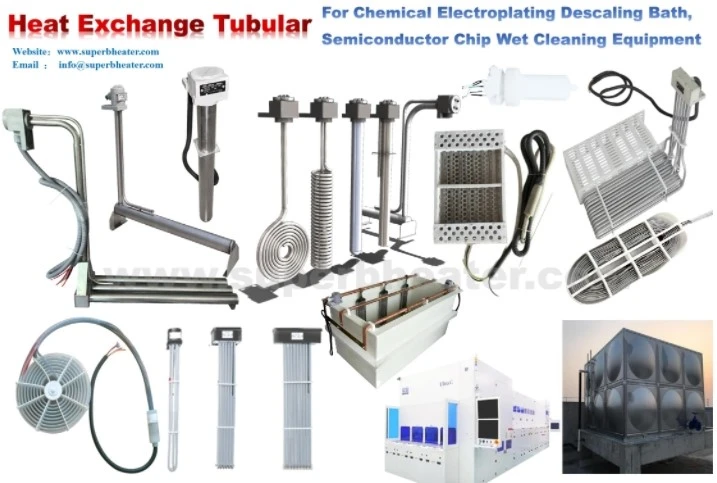
In many industrial purchasing decisions, the initial price of equipment tends to dominate discussions. When selecting a corrosion-resistant heating solution, such as a PTFE heating plate, this focus on upfront cost can be especially strong. At first glance, heaters with similar power ratings and dimensions may appear interchangeable, making the lowest price seem like the logical choice. However, experience across chemical processing, surface treatment, and laboratory applications shows that an under-specified heater often leads to higher overall expenses once it is placed into operation.
To understand the real cost of a PTFE heating plate, it is necessary to move beyond the purchase price and consider the full Total Cost of Ownership, or TCO.
Understanding Total Cost of Ownership in Heating Equipment
Total Cost of Ownership represents the sum of all costs incurred throughout the service life of a heating plate. This includes not only the initial investment, but also installation, energy consumption, routine maintenance, replacement intervals, and the financial impact of unplanned downtime.
In industrial environments where heaters operate continuously or in aggressive media, these secondary costs frequently exceed the original purchase price. Evaluating heating solutions through a TCO lens provides a more accurate basis for comparison, particularly for corrosion-resistant technologies.
Initial Investment Versus Specification Quality
A PTFE heating plate often carries a higher initial price than basic metal heaters or generic immersion elements. This difference typically reflects the cost of chemically inert materials, robust sealing methods, and controlled surface power density design.
When the initial investment is reduced by selecting a minimally specified heater, compromises are often made in areas such as insulation quality, seal design, or power distribution. While these compromises may not be immediately visible, they tend to shorten service life and increase the likelihood of premature failure in corrosive or high-temperature applications.
Often, the most economical choice over five years is not the lowest-priced heater, but the one that remains in service without interruption.
Installation and Integration Costs
Installation is another component frequently underestimated in cost analysis. Heating plates that are properly engineered for a given tank geometry, voltage specification, and control system generally integrate more smoothly into existing processes.
Poorly matched heaters may require additional brackets, rewiring, or control modifications. These adjustments increase labor time and introduce potential points of failure. In contrast, a well-specified PTFE heating plate designed for the actual operating conditions can reduce installation complexity and associated costs.
Energy Efficiency and Operating Costs
Energy consumption is a recurring cost that accumulates steadily over the life of a heater. PTFE heating plates designed with appropriate surface load and uniform heat distribution often operate more efficiently than alternatives with localized hot spots.
Uneven heating can cause control systems to overshoot setpoints or cycle excessively, wasting energy and stressing components. Even small efficiency losses become significant when heaters operate for thousands of hours per year. Over time, improved thermal efficiency translates directly into lower operating expenses.
Maintenance Frequency and Predictability
Maintenance is a major differentiator in total cost evaluations. In corrosive environments, heaters that require frequent cleaning, inspection, or replacement impose both direct and indirect costs.
A properly specified PTFE heating plate, matched to chemical concentration and temperature, typically exhibits slower material aging and reduced surface degradation. This results in longer inspection intervals and fewer emergency interventions. Maintenance becomes predictable rather than reactive, which is especially valuable in regulated or safety-critical operations.
Expected Lifespan and Replacement Cycles
Expected service life has a direct impact on capital planning. A heater that lasts two years instead of five effectively triples its annualized cost, even if the initial price was lower.
Field data consistently shows that PTFE heating plates operating within conservative design limits achieve significantly longer lifespans than those pushed to higher surface loads in aggressive media. Extending service life reduces not only replacement costs, but also the administrative and logistical burden of sourcing and installing new equipment.
The Hidden Cost of Unplanned Downtime
Unplanned downtime is often the most expensive component of TCO, yet it is rarely included in initial comparisons. Heater failure can halt production, delay shipments, and require emergency maintenance under suboptimal conditions.
In processes with high-value products or strict schedules, the cost of downtime may exceed the price of the heater itself within a single incident. From this perspective, investing in a more robust PTFE heating plate functions as risk mitigation rather than simple equipment procurement.
Conclusion: Looking Beyond the Price Tag
The real cost of a corrosion-resistant heating plate is determined over years of operation, not at the moment of purchase. Total Cost of Ownership provides a practical framework for evaluating heating solutions based on long-term value rather than initial expense.
When all factors are considered-installation, energy efficiency, maintenance, lifespan, and downtime-a properly specified PTFE heating plate often proves to be the most economical option, even with a higher upfront investment. For high-value or continuous processes, selecting a heating solution based on a full operational analysis is not merely a technical decision, but a strategic one that supports reliability, safety, and cost control over the long term.