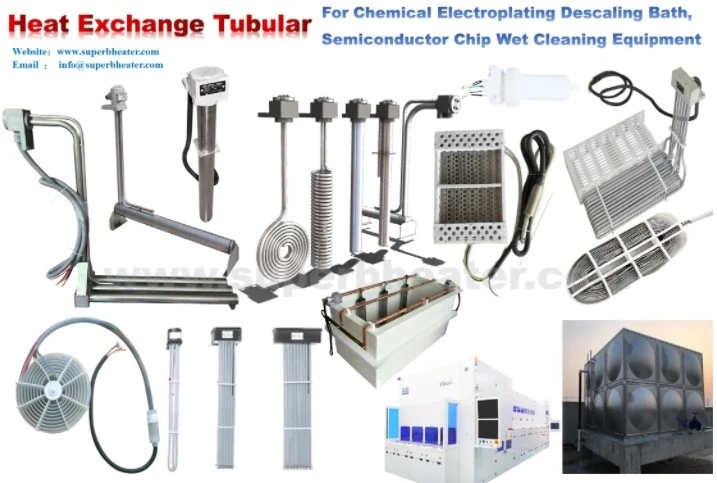
Pickling baths play a critical role in metal surface preparation, yet they are also one of the harshest environments for heating equipment. Sulfuric acid and hydrochloric acid are commonly used to remove oxides and scale, but these same acids aggressively attack conventional heaters. Frequent heater failure, leakage, and heavy sediment buildup are familiar pain points in many pickling lines. Downtime caused by heater replacement not only raises maintenance costs but also disrupts production flow and bath stability.
Why Pickling Bath Heating Is So Demanding
Pickling baths operate under a combination of strong acidity, elevated temperature, and suspended solids. As metal scale dissolves, iron salts and reaction byproducts accumulate at the bottom of the tank. These sediments can insulate heating surfaces, trap heat, and accelerate corrosion. Metallic heaters, even those made from stainless steel or specialty alloys, often struggle under these conditions.
In sulfuric acid heating, corrosion tends to be uniform at first and then accelerates once protective layers break down. In hydrochloric acid, localized pitting and rapid material loss are more common. Practically speaking, once corrosion starts, heat transfer becomes unstable, leading to hot spots and shortened heater life.
PTFE Heating Plates and Acid Resistance
PTFE heating plate technology offers a fundamentally different approach to corrosion protection. PTFE, or polytetrafluoroethylene, is chemically inert to both sulfuric and hydrochloric acid across a wide range of concentrations and temperatures typically found in pickling baths. Rather than relying on passive oxide layers, PTFE resists acid attack at the molecular level.
This chemical stability means the heating surface does not degrade over time. There is no gradual thinning, no pitting, and no release of metallic contaminants into the bath. In high-acid environments, this stability is the foundation for long service life and predictable performance.
Preventing Scaling and Sediment Adhesion
Another challenge in pickling bath heating is scale and sediment buildup. Metallic heaters often develop roughened surfaces as corrosion progresses, giving deposits more places to attach. Once sediment adheres, it forms an insulating layer that traps heat and creates localized overheating.
PTFE heating plates provide a smooth, non-stick surface that discourages adhesion of iron salts and other solids. It's worth noting that this does not eliminate sediment formation in the bath itself, but it significantly reduces buildup on the heating surface. As a result, heat transfer remains more uniform, and cleaning intervals can be extended without aggressive mechanical methods.
Heater Positioning: A Key Design Factor
Heater placement has a major impact on both performance and lifespan. In many failed installations, heaters are placed directly on the tank bottom, where sediment concentration is highest. This positioning exposes the heating surface to insulation by settled solids and increases the risk of overheating.
Based on experience, PTFE heating plates perform best when mounted slightly above the tank bottom or along the side walls of the pickling bath. This avoids direct contact with heavy sediment while still allowing effective heat transfer. Adequate spacing from tank walls also promotes fluid movement around the heater, helping distribute heat evenly.
In larger pickling tanks, using multiple heating plates instead of a single high-power unit improves temperature uniformity and reduces stress on each heater. Dividing total power across several zones creates gentler heating conditions and minimizes localized hot spots.
Managing Sediment for Longer Heater Life
Sediment management is often overlooked when addressing heater failures. Even the most corrosion-resistant heating plate benefits from a cleaner operating environment. Periodic removal of settled solids, sloped tank bottoms, or dedicated sediment collection areas can significantly improve heater performance.
Agitation or circulation also plays a role. Gentle solution movement prevents solids from settling directly on heating surfaces and supports uniform temperature distribution. In practice, improved circulation often reduces both sediment-related overheating and overall energy consumption.
Choosing the Right Power Density
Power density is a critical parameter in high-acid heating applications. Excessive surface watt density may seem attractive for rapid heat-up, but it dramatically increases thermal stress. In corrosive pickling baths, lower and well-distributed power is usually more effective over the long term.
PTFE heating plates allow for conservative power density design without sacrificing temperature control. Operating at moderate surface temperatures reduces the risk of localized boiling, acid decomposition, or accelerated aging of system components. Practically speaking, heaters designed for continuous, stable operation tend to outlast high-output units pushed to their limits.
Long-Term Benefits in Pickling Operations
Over extended operating periods, the advantages of PTFE heating plates become more apparent. Stable heat transfer, resistance to acid attack, and reduced scaling all contribute to longer service life. Maintenance becomes more predictable, and unplanned shutdowns due to heater failure are reduced.
In sulfuric acid heating and hydrochloric acid pickling baths alike, consistent temperature control also supports more uniform pickling results. This improves downstream processing and reduces variability in surface quality.
Conclusion: Designing for Durability in High-Acid Baths
Extending heater life in pickling baths requires more than selecting a corrosion-resistant material. PTFE heating plate solutions provide strong protection against acid attack and scaling, but optimal results depend on proper positioning, sediment management, and appropriate power density.
Bath geometry, acid concentration, operating temperature, and solids content all influence heater performance. When these factors are considered together during heater selection and configuration, pickling bath heating becomes more reliable, efficient, and easier to maintain over the long term.
窗体顶端