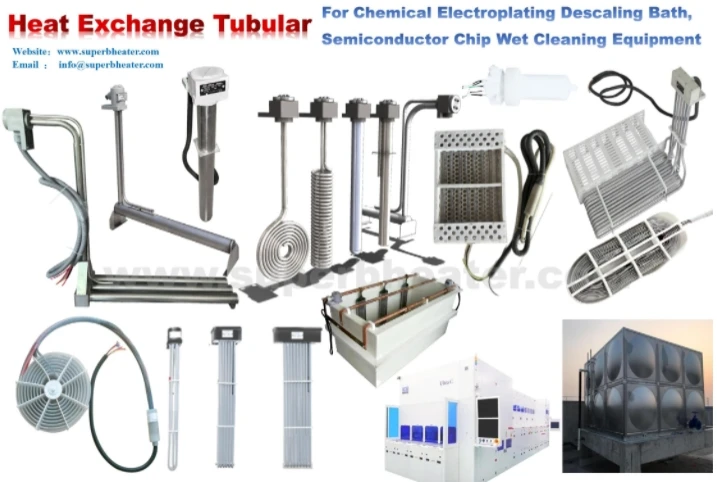
In industrial operations, it is common to observe that two seemingly identical PTFE heat exchangers installed in different locations exhibit dramatically different service lives. One unit may operate reliably for decades, while another fails prematurely after only a few years. Understanding the factors that influence longevity is essential for operators seeking to maximize equipment life and calculate the true return on investment.
Operating Temperature
Operating temperature is one of the most significant factors affecting PTFE heat exchanger service life. PTFE has a high chemical and thermal resistance, but continuous exposure near its upper temperature limits accelerates material degradation. Maintaining a safety margin below the maximum allowable temperature slows aging and preserves mechanical properties. In practice, a PTFE exchanger operated consistently at 150 degrees Celsius may last for decades, whereas one exposed to 200 degrees Celsius continuously can experience early deformation, creep, or embrittlement, shortening its service life substantially.
Chemical Compatibility
Even PTFE has chemical limits, particularly at elevated temperatures. While highly resistant to acids, bases, and many solvents, certain aggressive chemicals can attack the material or interact with internal components. Verifying chemical compatibility with process fluids ensures that the exchanger does not experience accelerated degradation, swelling, or stress cracking. Careful selection of PTFE grade and attention to fluid concentration and temperature are critical to maintaining longevity in chemically demanding applications.
Mechanical Factors
Mechanical stress plays a central role in PTFE heat exchanger life. Vibration from pumps or nearby equipment, thermal cycling during start-up and shutdown, and pipe stress from misalignment or unsupported runs can all contribute to fatigue failure over time. Flexible design, adequate tube supports, and proper anchoring reduce these risks. In practice, many premature failures are traced not to material degradation but to mechanical stress caused by poor installation or insufficient support, underscoring the importance of considering the mechanical environment in addition to chemical and thermal conditions.
Installation and Maintenance Practices
Proper installation and ongoing maintenance are vital to maximizing service life. Ensuring that tube bundles are correctly supported, gaskets are replaced before excessive compression set occurs, and the system is regularly cleaned prevents both mechanical and chemical damage. Preventive maintenance, including inspection of tube integrity, baffle condition, and support structures, helps identify issues before they escalate into catastrophic failures. Neglecting these practices can drastically reduce service life even when operating conditions are otherwise suitable.
Practical Insights
Several practical observations emerge from reliability analysis of PTFE heat exchangers. First, operating well below material limits and avoiding rapid temperature swings significantly extends life. Second, careful attention to mechanical stresses-both static and dynamic-prevents fatigue-related failures. Third, chemical exposure must be continuously evaluated to ensure that process changes or concentration spikes do not exceed PTFE's resistance. Together, these considerations create a holistic approach that combines design, installation, and operation to optimize longevity.
Summary
The service life of a PTFE heat exchanger is determined by a combination of operating temperature, chemical compatibility, mechanical stress, and installation and maintenance practices. Longevity is maximized when the exchanger operates within safe temperature margins, in fluids compatible with the PTFE grade, and under controlled mechanical conditions. Adequate supports, vibration isolation, proper gasket management, and preventive maintenance all contribute to sustained performance. Understanding these factors enables operators to plan for maintenance intervals, calculate total cost of ownership, and ensure reliable heat transfer performance over many years.
By addressing the interplay of thermal, chemical, and mechanical factors, operators can extend PTFE heat exchanger service life, reduce unplanned downtime, and achieve a more predictable and favorable return on investment.