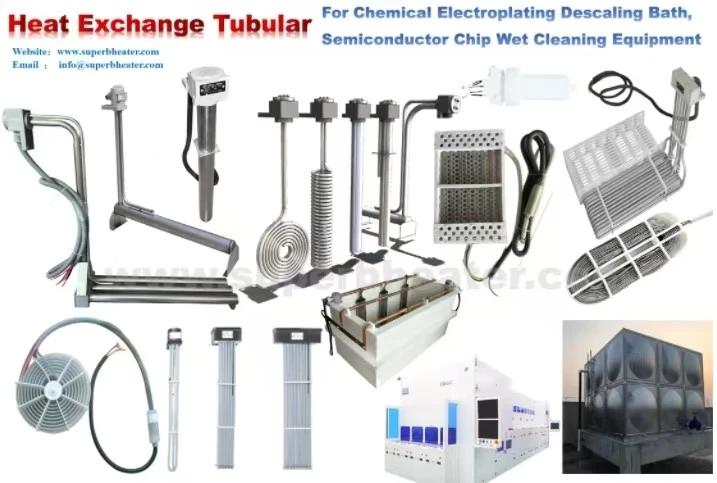
In industrial processes involving highly corrosive media-such as concentrated sulfuric acid dehydration, nitric acid oxidation reactions, or high-temperature acid digestions in mining and analytical chemistry-engineers face a critical dilemma: the need for elevated temperatures often exceeds the continuous service limits of standard polymer-based heaters. Materials like polytetrafluoroethylene (PTFE), prized for their inertness in acidic environments, typically cap out at around 150–200°C for sustained use before risking softening, deformation, or reduced mechanical integrity. This threshold creates a gap in reliable heating solutions, where pushing beyond it without compromising corrosion resistance can lead to equipment failure, process inefficiencies, or safety hazards. From a practical standpoint, selecting the right heater demands balancing thermal demands with chemical aggressivity, often requiring innovative material combinations to achieve viability in these harsh settings.
Temperature Limitations of Corrosion-Resistant Materials
Corrosion-resistant heating elements must withstand both the acidic attack and the thermal stress inherent to processes above 150°C. Fluoropolymers like PTFE and perfluoroalkoxy (PFA) offer exceptional chemical inertness, resisting penetration by strong acids such as hydrochloric, sulfuric, or hydrofluoric across broad concentration ranges. However, PTFE's continuous service temperature is generally limited to 260°C in air, but drops significantly in immersed acidic conditions due to permeation risks and thermal expansion mismatches that can cause cracking or delamination. PFA, with similar chemical properties, fares slightly better up to 250°C but shares vulnerabilities to creep under prolonged heat and load.
Metallic alternatives extend thermal capabilities but introduce trade-offs in corrosion resistance. Titanium excels in oxidizing acids like nitric or chromic, withstanding temperatures up to 400°C, yet it succumbs to reducing acids such as hydrochloric or sulfuric, where hydrogen embrittlement or pitting occurs. Hastelloy alloys (e.g., C-276) provide broader resistance to mixed acids and chlorides, handling up to 300–400°C in certain configurations, but their nickel-molybdenum composition can suffer intergranular attack in highly concentrated sulfuric acid above 200°C. Tantalum offers superior performance across most acids up to 300°C but at exorbitant costs, limiting its use to niche applications. From a practical standpoint, these metals require precise alloy selection based on the acid type and concentration, as even minor impurities can accelerate degradation at higher temperatures.
Hybrid Solutions: Quartz Sheaths with Teflon Protection
To bridge the gap between thermal endurance and corrosion resistance, hybrid designs incorporating quartz sheaths encased in a protective Teflon sleeve represent a compelling option. Quartz, with its high melting point exceeding 1600°C and excellent thermal shock resistance, serves as the primary structural and heat-conducting layer, capable of withstanding temperatures well above 300°C without deformation. The outer Teflon (PTFE) sleeve acts as a barrier at the fluid interface, leveraging its non-wetting, chemically inert properties to shield the quartz from direct acidic attack. This configuration is particularly effective in immersion heaters for acidic environments, where the quartz core ensures efficient heat transfer via radiation and conduction, while the PTFE prevents etching or dissolution that pure quartz might experience in hydrofluoric acid-containing mixtures.
In practice, these hybrids are engineered with sealed junctions to avoid fluid ingress, often incorporating PFA or FEP variants for enhanced flexibility at connection points. They allow safe operation in processes like hot acid leaching or catalytic reactions, where temperatures reach 200–300°C. However, limitations include potential sleeve wear over time and the need for careful handling to prevent mechanical damage to the brittle quartz.
Comparing Hybrids to Exotic Metal Alloys
When evaluating hybrids against exotic metal alloys, the choice hinges on process specifics. Quartz-Teflon systems offer cost advantages-typically 20–50% less than tantalum or high-grade Hastelloy-while providing comparable or superior corrosion resistance in non-halogenated acids. Their modular design facilitates easier replacement of the PTFE sleeve, reducing downtime compared to monolithic metal heaters that require full unit swaps upon failure. However, metals like Hastelloy outperform in high-pressure or abrasive conditions, where quartz's fragility could lead to fractures.
Hybrids shine in thermal uniformity, as quartz's low thermal expansion minimizes stress during rapid heating cycles, unlike metals prone to warping. Yet, for ultra-high temperatures beyond 400°C, alloys remain the go-to, as PTFE's limits cap hybrid viability. From a practical standpoint, hybrids reduce overall system costs in mid-range applications (150–300°C) but demand rigorous compatibility testing to ensure the PTFE layer holds up against vapor-phase acids.
Practical Guidance for Heater Selection
Accurately defining the maximum required process temperature is essential, as over-specifying can inflate costs unnecessarily. Begin with a detailed fluid analysis, including pH, concentration, and potential contaminants, then map these against material datasheets. Understand trade-offs: hybrids prioritize corrosion resistance and thermal shock tolerance but may sacrifice durability in turbulent flows, while metals offer robustness at higher upfront expenses.
Incorporate safety margins-aim for heaters rated 20–50°C above peak needs-and consider ancillary features like over-temperature cutoffs. Pilot testing in simulated conditions validates choices, revealing issues like sleeve swelling or metal pitting. From a practical standpoint, collaborating with suppliers for custom configurations ensures optimal fit.
Summary: Tailored Solutions for Demanding Applications
High-temperature heating in acidic environments pushes the boundaries of material science, where no single option universally dominates; instead, tailored solutions like quartz-Teflon hybrids or specialized alloys prevail based on specific demands. For such rigorous applications-whether in chemical synthesis or waste processing-a thorough review of the exact temperature profile, chemical concentration gradients, and safety factors is mandatory before specifying any heating element. This diligence not only extends equipment life but also safeguards process integrity, minimizing risks in B2B industrial operations.