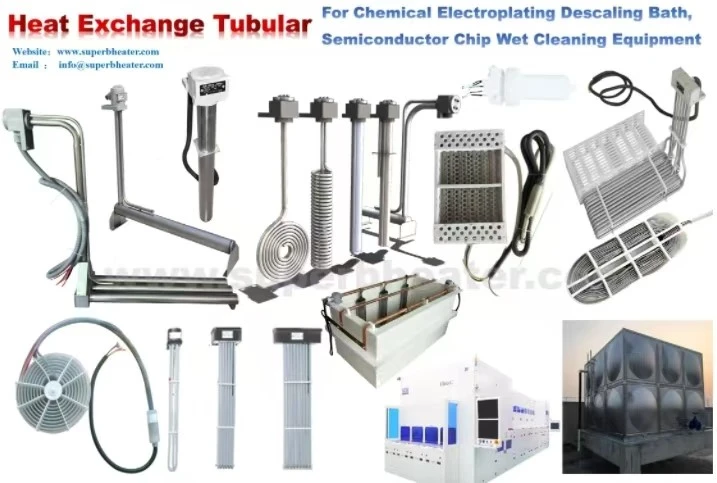
In pharmaceutical and bioprocessing facilities, Clean-in-Place (CIP) and Sterilize-in-Place (SIP) systems define the hygiene baseline for production equipment. These systems subject every wetted component to repeated cycles of caustic cleaning agents, acidic rinses, and high-temperature saturated steam. Heating elements operating within this environment must do far more than deliver thermal energy. They are expected to maintain structural integrity, resist chemical degradation, and avoid creating any surface features that could harbor microorganisms. Failures in this context are not limited to equipment damage; they can directly compromise product quality and regulatory compliance.
The challenge is intensified by the frequency of CIP and SIP cycles. In many facilities, cleaning and sterilization occur daily or even multiple times per shift. Over time, this combination of chemical exposure, pressure, and thermal cycling places exceptional stress on heater materials and construction.
Why Standard Heaters Often Fail in CIP/SIP Service
Conventional electric heaters, even those designed for industrial liquid heating, are often not optimized for the specific demands of CIP and SIP systems. One common failure mode arises during SIP, where saturated steam at elevated temperature and pressure rapidly heats the heater assembly. Differences in thermal expansion between the heater sheath, internal components, and sealing materials can create mechanical stresses. Repeated cycles may lead to microcracking, loss of seal integrity, or moisture ingress into the heater.
During CIP, chemical attack becomes the dominant risk. Alkaline solutions used for protein or biofilm removal, followed by acidic rinses for mineral scale control, can degrade metallic sheaths and elastomeric seals. Over time, this degradation may expose underlying materials or create surface roughness. From a hygienic design perspective, even minor surface changes can become potential harborage points where residues persist despite cleaning.
Based on validation experience, heaters that were originally acceptable for process heating may gradually become the weak link in an otherwise compliant CIP/SIP system.
Material Requirements for Hygienic Heating
Material selection is central to heater reliability in CIP/SIP environments. The sheath material must resist a wide range of chemicals while maintaining a smooth, cleanable surface. Polytetrafluoroethylene (PTFE), commonly known as Teflon, is frequently selected for this role due to its exceptional chemical inertness.
PTFE exhibits broad resistance to both strong acids and caustic cleaning agents typically used in CIP programs. Unlike many metals, it does not corrode or form reaction layers that could later shed particles. Its naturally smooth, non-stick surface discourages the adhesion of soils, proteins, and biofilms, supporting effective cleaning during each CIP cycle.
In addition, PTFE heating elements can tolerate the temperature ranges commonly encountered in SIP processes. While PTFE is not intended for the highest industrial temperatures, it comfortably covers the operating window of most pharmaceutical SIP cycles, which are designed around validated sterilization temperatures rather than extreme heat.
Construction Details That Matter
Beyond material chemistry, the physical construction of the heater plays a decisive role in CIP/SIP performance. Seamless sheath construction is critical. Welds, joints, or transitions in wetted areas can create crevices where cleaning solutions or residues become trapped. Over repeated cycles, these areas may become contamination risks or points of accelerated degradation.
Heater terminations and seals require equal attention. Sealing materials must be compatible with the full range of CIP chemicals and SIP temperatures, without swelling, hardening, or losing elasticity. Thermal expansion behavior should be matched across components to minimize stress during rapid heating and cooling.
From a hygienic design standpoint, the heater surface should support full drainage. Horizontal ledges or dead zones that retain liquid after cleaning undermine the effectiveness of both CIP and SIP cycles.
Comparing Heating Approaches in CIP/SIP Systems
Integrated immersion heaters are often preferred over external heating methods in CIP/SIP systems because they deliver direct heat transfer and rapid response. External jackets or heat exchangers may introduce additional surfaces that require validation and cleaning, increasing system complexity.
However, integrated heating places the heater directly within the hygiene envelope of the process. This makes material choice, surface finish, and construction quality even more critical. PTFE-based heating elements, including custom-shaped immersion heaters, are often selected to align with these requirements while fitting within compact equipment geometries.
Selection Checklist for CIP/SIP Heaters
A structured evaluation approach helps ensure long-term reliability:
Pressure and temperature ratings: Confirm suitability for maximum SIP steam conditions.
Chemical compatibility: Verify resistance to all CIP chemicals across concentration and temperature ranges.
Seamless wetted surfaces: Eliminate crevices, weld seams, or exposed transitions.
Seal integrity: Use high-purity, CIP/SIP-rated sealing materials.
Surface finish and drainage: Support complete cleaning and sterilization without residue retention.
Based on validation experience, documenting these characteristics early simplifies qualification and reduces future deviation risk.
Conclusion
In CIP and SIP applications, the heater must be treated as an integral part of the hygiene envelope, not merely a utility component. Its materials, construction, and integration directly influence cleanability, sterility assurance, and long-term system reliability. PTFE heating elements are favored in many pharmaceutical and bioprocessing systems because they combine broad chemical resistance, smooth non-stick surfaces, and compatibility with typical SIP temperature ranges.
For complex bioreactor, fermenter, or formulation systems, success often depends on thoughtful integration. Custom-shaped immersion heaters or sanitary heat exchanger designs, combined with appropriate surface finishes and drainage characteristics, can align heating performance with hygienic design principles. In these environments, careful heater selection is not optional; it is foundational to validated, compliant operation.