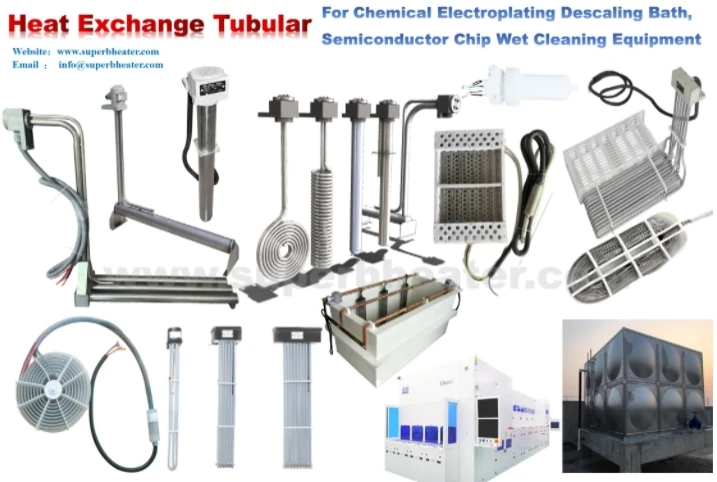
Occasionally, a failure investigation reaches an uncomfortable conclusion. A Polytetrafluoroethylene (PTFE) immersion heater fails prematurely. Inspection finds no installation stress, no operational errors, and no abnormal process upsets. Electrical supply is stable, liquid levels were maintained, and maintenance procedures were followed. Yet cracking, deformation, or localized overheating occurred. After eliminating common causes, the remaining possibility is difficult but necessary to confront: the heater may never have been the right design for the application.
For procurement and engineering professionals, this realization raises an important question about design suitability and application matching. A heater can be well manufactured and properly installed, yet still be fundamentally mismatched to its duty. An honest specification review is often the starting point for preventing repeated failures.
Power Adequacy and Duty Cycle
The first element of design suitability is power adequacy. Was the heater correctly sized for the required heat load? In many installations, heaters are selected based on nominal tank volume rather than detailed heat balance calculations. If the installed power is barely sufficient to meet process demand, the heater may operate continuously at or near 100 percent duty cycle.
Running at full output without recovery margin increases sheath temperature and internal stress. Although PTFE provides chemical resistance, it does not eliminate the thermal limits of the heating element beneath. Continuous maximum loading leaves little tolerance for minor process variations such as colder feed temperatures or higher throughput.
Performance adequacy should be evaluated by reviewing the original design heat load, including sensible heating, heat losses, and any phase change requirements. If the heater was sized with minimal margin, the apparent reliability issue may simply reflect chronic overloading.
Watt Density and Surface Loading
Watt density, or surface load, is often the decisive parameter in heater longevity. It represents the power output per unit surface area of the sheath. Even if total kilowatts appear correct, excessive watt density can cause localized overheating.
Surface load must match the thermal characteristics of the fluid and flow conditions. A heater designed for water, which has high heat transfer coefficient and good circulation, may perform poorly in a viscous oil or stagnant chemical bath. Lower heat transfer causes higher sheath temperature for the same watt density.
In practice, a common mismatch involves installing a heater specified for low-viscosity fluids into a thick or poorly agitated medium. The reduced heat removal rate elevates sheath temperature beyond intended limits, accelerating degradation or cracking. This represents a classic right tool for the wrong job scenario.
Specification review should include comparing actual fluid properties, viscosity, flow regime, and operating temperature against the assumptions used during selection. If the surface load exceeds recommended limits for the real process conditions, premature failure becomes predictable.
Material Grade Considerations
Not all PTFE constructions are identical. Standard grades may be suitable for moderate temperature and chemical exposure, but certain applications require higher-performance variants or reinforced constructions.
Questions should be asked regarding maximum continuous operating temperature, chemical compatibility at elevated temperature, and mechanical stress conditions. In aggressive environments, a higher-grade fluoropolymer or modified PTFE compound may provide improved creep resistance or mechanical strength.
If the original procurement focused primarily on cost, the selected material grade may have been technically acceptable but marginal for long-term durability. Over time, that margin erodes under real operating stress.
Physical Configuration and Heat Distribution
Design suitability also depends on physical configuration. Heater shape, length, and orientation must align with tank geometry to ensure uniform heat distribution and proper convection.
If the heated length is too short relative to tank depth, localized hot zones may develop near the heater surface. If the configuration prevents adequate circulation, stratification can occur, raising sheath temperature in stagnant regions.
Long, narrow tanks may require multi-loop or serpentine designs to distribute heat evenly. Shallow tanks may need low-profile configurations. A mismatch between heater geometry and vessel layout compromises performance adequacy even if electrical parameters appear correct.
Evaluation should compare the installed configuration against actual tank dimensions, fluid depth, and mixing characteristics. A heater that fits mechanically may not be optimally configured thermally.
Reviewing the Original Specification
An objective framework for assessing design suitability involves returning to the original specification and comparing it against current operational reality. Key elements include required heat load, target temperature rise time, fluid properties, maximum allowable sheath temperature, and duty cycle.
In many premature failures, the initial selection process relied heavily on price or standard catalog options. While cost control is important, selecting solely on initial purchase price can overlook long-term reliability implications. The result is often a heater that meets minimum requirements but lacks performance margin.
A structured specification review identifies gaps between assumed and actual conditions. Any discrepancy in heat load, fluid characteristics, operating temperature, or mechanical constraints should trigger reconsideration of fit-for-purpose design.
Ensuring Fit-for-Purpose Design
Recognizing that a heater was not ideally matched to its application is not an admission of error but a step toward reliability improvement. Design suitability requires alignment between thermal demand, material capability, watt density limits, and physical configuration.
For critical applications, involving the heater manufacturer early in the specification process can strengthen application matching. Detailed heat balance calculations, fluid property analysis, and configuration modeling help ensure that the selected design provides sufficient margin for long-term operation.
Ultimately, preventing future failures depends on honest evaluation. When performance adequacy and fit-for-purpose design become central criteria-rather than secondary considerations-PTFE heaters can deliver reliable service consistent with their intended capabilities.