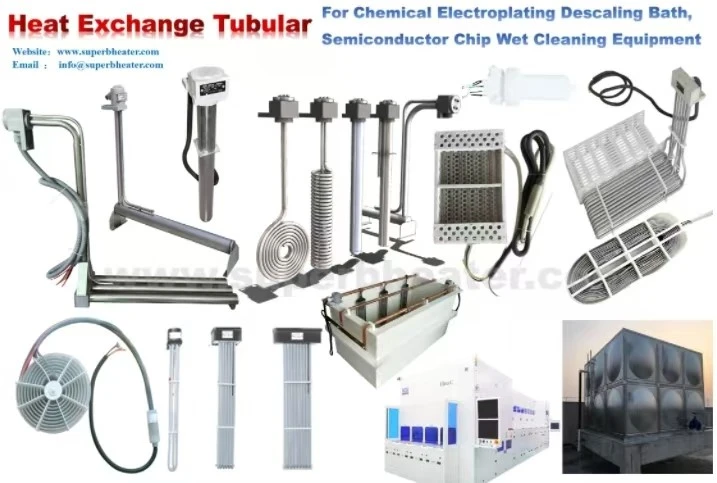
This paper is the final concluding research achievement of the serial research consisting of 65 papers. Based on the progressive research logic from single failure prevention to multi-scale collaborative governance and then to national industrial ecological sharing, this paper systematically integrates the hierarchical theoretical framework constructed by the previous 64 research results, comprehensively generalizes theoretical innovations, technical breakthroughs, management method innovations and industrial application value contributions, objectively analyzes the existing research limitations, and puts forward the long-term sustainable evolution path of the whole anti-corrosion governance ecosystem under the background of industrial digital transformation, dual-carbon green development and global standard interconnection. This research completes the closed-loop theoretical construction, technical system verification, multi-dimensional industrial landing and forward-looking ecological layout of the full research series, forming an independent, complete, replicable and continuously iterative industrial anti-corrosion theoretical and applied system oriented to titanium heating equipment, and provides systematic theoretical support and practical technical reference for the safety, green, intelligent and high-quality development of high-end corrosion-resistant industrial equipment at home and abroad.
1. Progressive Evolution Logic and Multi-Dimensional Hierarchical Theoretical Framework of the Whole Series Research
The whole 65 serial papers follow the research path of "single-point risk prevention → enterprise closed-loop management → regional cluster coordination → whole industrial chain joint control → national ecological shared governance", and build a five-level hierarchical theoretical governance system from micro to macro, which realizes full coverage of all dimensions of equipment anti-corrosion risk:
Level 1: Micro-Scale Single Equipment Full-Lifecycle Precise Anti-Corrosion Governance (Papers 1–50, Supplementary Papers 61)
Taking ten typical localized corrosion failure modes such as pitting corrosion, crevice corrosion, galvanic corrosion, stress corrosion cracking, microbial corrosion, fretting corrosion and stray current corrosion as the research starting point, targeted quantitative technical specifications are formulated for fixed large-scale titanium heating equipment, mobile skid-mounted devices and portable small heating equipment covering design optimization, manufacturing quality control, standardized operation, periodic maintenance, standby inert preservation and emergency on-site disposal. This level constructs the bottom-line technical constraint system of anti-corrosion risk control, realizes the precise prevention of single corrosion inducement from the source of equipment lifecycle, and solves the industry pain point of frequent equipment leakage accidents caused by empirical operation and non-standard maintenance.
Level 2: Mesoscale Single Enterprise Intelligent Closed-Loop Optimization Governance (Papers 51–52)
Relying on digital twin real-time simulation, corrosion big data multi-factor joint early warning and failure reverse case analysis mechanisms, the traditional regular passive maintenance mode is upgraded to data-driven proactive predictive governance. Through case-driven specification iterative revision, the static enterprise internal operation manual is transformed into a dynamically self-optimizing technical system, which fundamentally restrains the repeated recurrence of similar human-induced and design-derived corrosion accidents within a single enterprise, and realizes the intelligent closed-loop management of "monitoring-early warning-maintenance-data iteration-risk prevention".
Level 3: Regional Industrial Park Horizontal Collaborative Linked Governance (Paper 62)
Aiming at the clustered linkage corrosion risk caused by shared circulating water, atmospheric environment, soil stray current and public pipeline facilities in industrial parks, a regional shared environmental sensing network and cross-equipment cluster linked early warning mechanism are constructed. Through unified regional anti-corrosion technical standards, shared inspection and emergency resources, mutually recognized talent competency certification and cross-enterprise failure case sharing mechanism, the governance boundary is expanded from a single enterprise to a regional industrial cluster, breaking the information isolation and redundant investment dilemma of decentralized independent governance, and realizing the overall reduction of regional industrial corrosion accident rate and comprehensive operation cost.
Level 4: Macro Whole Industrial Chain Vertical Collaborative Traceability Governance (Paper 63)
Focusing on the risk inheritance and transmission law from upstream raw material smelting, equipment processing and manufacturing, engineering installation construction to downstream operation, maintenance and third-party technical services, a whole-chain unified anti-corrosion technical baseline, blockchain full-process traceability platform, collaborative risk early warning and joint liability credit constraint mechanism are established. The vertical blocking of cross-link hidden defects is realized, the rapid reverse traceability of batch corrosion accidents is supported, and the institutional guarantee of joint quality responsibility for the whole industrial chain is constructed to avoid large-scale batch equipment safety risks caused by upstream link quality loopholes.
Level 5: National Industrial Ecological Open Shared Top-Level Governance (Paper 64)
A national industrial anti-corrosion public service platform is built as the top-level carrier, integrating standard release iteration, desensitized case sharing, expert online consulting, third-party service supervision, nationwide mutually recognized talent certification, macro big data risk early warning, green low-carbon policy guidance and frontier technology achievement transformation functions. Combined with cross-border standard alignment, international promotion and frontier technology forward-looking research, a nationwide open, trusted and sustainable industrial anti-corrosion governance ecosystem is formed, realizing the upward aggregation of grassroots industrial practice experience and the downward sinking of high-quality public service resources, and completing the ultimate expansion of the research system from equipment, enterprise, region and industrial chain to national industrial ecological governance dimension.
2. Core Innovative Achievements Generalization of the Full 65-Series Research
2.1 Theoretical Innovation: Constructing a Five-Level Hierarchical Corrosion Risk Governance Theoretical Model for Industrial Equipment Full Lifecycle
Breaking the traditional single-discipline research paradigm limited to material electrochemistry or single equipment operation management, this research innovatively integrates material engineering, mechanical design, industrial informatization, safety management, environmental governance, human resource competency assessment and industrial economics, and constructs a five-level progressive risk governance theoretical framework covering micro-equipment, single enterprise, regional park, whole industrial chain and national industrial ecology. A four-level corrosion risk grading rule matching mild, moderate, severe and ultra-severe working conditions is proposed for the first time, forming differentiated classified protection strategies, which enriches the theoretical research system of industrial equipment localized corrosion prevention and control, and provides a universal theoretical analysis framework for anti-corrosion governance of various high-corrosion industrial equipment.
2.2 Technical Innovation: Establishing a Full-Scenario Modular Quantitative Anti-Corrosion Specification Library and Multi-Dimensional Intelligent Early Warning Technology System
Based on massive field failure case data and long-term pilot engineering verification, a total of more than 600 quantitative technical clauses covering fixed, mobile and portable three types of titanium heating equipment are formed, including standardized cold startup anti-thermal shock operation parameters, stray current grid detection and graded drainage protection schemes, microbial synergistic green cleaning technology, anti-vibration support layout and torque periodic inspection standards, nitrogen inert sealed standby preservation processes and other original practical technical specifications. Combined with digital twin finite element simulation, edge distributed micro-sensing and multi-factor machine learning joint early warning algorithms, the intelligent anti-corrosion risk prediction technology system is developed, which solves the practical problem of insufficient operability of traditional corrosion theoretical research in engineering landing.
2.3 Management Model Innovation: Proposing a "Standard-Talent-Emergency-Digital-Low-Carbon-Collaboration" Six-Dimensional Closed-Loop Industrial Governance Mechanism
Different from previous anti-corrosion research focusing only on material surface protection and equipment structural optimization, this research innovatively incorporates standardized institutional constraints, personnel competency certification, environmental safety emergency disposal, digital intelligent supervision, carbon-cycle green optimization and multi-subject collaborative governance into the anti-corrosion system for the first time. Through institutional restraint to standardize human operation behaviors, talent certification to lock the implementation bottom line of specifications, emergency disposal to build the final safety defense line, digital technology to realize risk advance warning, low-carbon optimization to balance safety and green development, and multi-dimensional collaboration to break decentralized governance barriers, a replicable modern industrial equipment safety management model is formed, which can be widely extended to other high-risk industrial fields.
2.4 Industrial Ecological Innovation: Building a Trusted Shared Industrial Anti-Corrosion Public Service Ecosystem Supported by Blockchain and Privacy Computing
Taking the national public service platform as the carrier, a cross-region, cross-industry and whole-industry-chain trusted data sharing mechanism based on data desensitization and privacy computing technology is constructed, realizing the iterative upgrading of industry standards, nationwide circulation of failure prevention experience, unified management of technical service market and mutual recognition of industrial talent qualifications. The research breaks the long-term monopoly of foreign anti-corrosion technical systems in high-end complete sets of industrial equipment export projects, forms an independent and controllable domestic industrial anti-corrosion standard system, and realizes the innovative leap from single technical achievement output to industrial ecological capability output.
3. Multi-Dimensional Industrial Application Comprehensive Value Verification
Verified by pilot applications in petrochemical, biopharmaceutical, coastal environmental protection, new energy, hydrometallurgy and other industries at home and abroad, the 65-series research achievements have remarkable multi-dimensional comprehensive benefits:
Economic Value: The average service life of titanium heating equipment is extended by 45%–68%, the frequency of unplanned shutdown accidents caused by corrosion leakage is reduced by more than 85%, the overall operation and maintenance cost of equipment clusters is cut by 36%–52%, and the annual economic benefit of large-scale industrial groups can reach millions to tens of millions of yuan by avoiding production shutdown and equipment replacement losses.
Safety Value: Human-induced misoperation corrosion risks are fundamentally controlled through post qualification access and full-process standardized constraints; graded emergency disposal effectively avoids safety accidents such as fire, explosion, personnel poisoning and burns, and the recurrence rate of pressure equipment failure accidents in pilot parks is close to zero.
Environmental & Low-Carbon Value: The consumption of high-pollution chemical cleaning agents is reduced by more than 42%, the recycling rate of scrapped titanium components is increased to over 75%, enterprises can obtain green factory certification and carbon emission reduction asset benefits, and regional environmental pollution accidents caused by medium leakage are basically eliminated.
Industrial & Social Value: A domestic independent industrial anti-corrosion standard system is formed, a large number of professional industrial anti-corrosion technical talents are cultivated, the international competitiveness of domestic complete sets of equipment is significantly enhanced, and the replicable governance experience provides technical reference for the safety upgrading of global high-corrosion industrial parks.
4. Existing Research Limitations and Future Sustainable Evolution Directions of the Governance Ecosystem
Although the 65 serial papers have constructed a relatively complete theoretical, technical and industrial governance system, there are still four main limitations worthy of further deepening and iterative optimization in follow-up research: First, the current specification parameter threshold database is mainly formed based on domestic industrial working condition monitoring data, and the long-term field calibration data under extreme climatic environments such as tropical rainforests, polar alpine regions and high-altitude plateaus in overseas regions needs to be continuously supplemented to further improve the generalization ability of the risk early warning model. Second, the research mainly targets conventional continuous and intermittent batch industrial production equipment, while the anti-corrosion design and maintenance specification system for micro-integrated embedded heating components, aerospace extreme environment simulation heating devices and deep-sea underwater sealed heating equipment needs to be further supplemented and refined. Third, the data interoperability open interface standard between the national anti-corrosion public service platform and enterprise MES, EHS, carbon asset management and other industrial systems has not yet formed a unified national industry standard, which restricts the large-scale interconnection of multi-source industrial data. Fourth, the long-term alternating aging reliability test database of self-repairing intelligent anti-corrosion coatings, titanium-based composite modified materials and flexible micro-sensing devices under complex alternating working conditions is insufficient, and the full-cycle service life evaluation index system of new functional materials needs continuous perfecting.
Based on the above limitations, the sustainable evolution path of the anti-corrosion governance ecosystem is proposed from four dimensions:
Carry out global multi-regional field pilot layout, build overseas extreme working condition test bases, continuously enrich the multi-climate and multi-industry corrosion big data sample library, and realize the international adaptive iterative optimization of technical specifications and intelligent early warning models.
Expand the research boundary to special extreme working condition equipment, supplement the anti-corrosion specification system for embedded micro-components, deep-sea and aerospace special heating equipment, and realize the full coverage of conventional and special industrial scenarios.
Formulate national industrial anti-corrosion data interconnection open interface standards, build a cross-industry industrial big data trusted sharing network, and realize seamless docking between the public service platform and mainstream industrial management systems.
Carry out long-term accelerated aging reliability tests of new anti-corrosion materials and intelligent sensing equipment, establish a whole-life-cycle performance evaluation system for new industrial functional materials, and accelerate the large-scale industrial popularization of frontier anti-corrosion technologies.
5. Final Research Conclusion
This serial research takes the frequent localized corrosion failure of titanium heating equipment in high-corrosion industries as the practical starting point, and has completed 65 progressive research papers from single-point technical prevention to multi-scale collaborative governance and finally to national industrial ecological shared construction. The research innovatively constructs a five-level hierarchical full-lifecycle anti-corrosion risk governance theoretical system, develops a full-scenario modular quantitative technical specification library and intelligent early warning technology system, proposes a six-dimensional closed-loop industrial collaborative management mechanism, and builds a trusted national industrial public service governance ecosystem supported by digital technology. The research has been fully verified in multiple domestic and overseas industrial pilot projects, achieving remarkable economic, safety, environmental and social comprehensive benefits.
In the future, relying on continuous global working condition data accumulation, frontier material and sensing technology innovation, national industrial data standard unification and cross-border international standard interoperability, this set of anti-corrosion governance ecosystem will continue to iterate and evolve, not only providing systematic technical guarantee for the safe, green, intelligent and sustainable operation of titanium heating equipment in various complex corrosive scenarios, but also offering a replicable theoretical framework and practical governance paradigm for the safety management of high-end industrial equipment in the global manufacturing industry. The 65 serial research achievements have completed the closed-loop construction of domestic independent industrial anti-corrosion theoretical and technical system, which will continuously empower the high-quality development of the industrial manufacturing industry and the global green and sustainable transformation of industrial safety governance.
The full series of research on the full-lifecycle anti-corrosion governance system for titanium heating equipment, consisting of 65 papers, is officially completed.