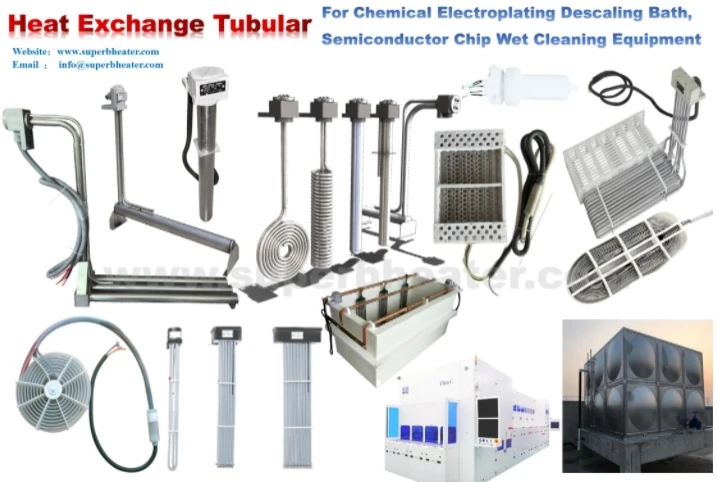
Many industrial facilities have successfully operated standard PTFE heat exchangers for years without issue. However, when processes transition to more sensitive applications-such as pharmaceutical production, semiconductor manufacturing, or high-purity water systems-contamination problems may emerge. Understanding the differences between standard industrial PTFE and high-purity grades is essential to ensure that the material selection aligns with process requirements and avoids costly quality issues.
Differences Between Material Grades
Standard industrial grade PTFE is widely used in chemical processing due to its chemical resistance, mechanical stability, and ease of fabrication. These materials may contain trace additives, pigments, or processing aids that help during manufacturing but can leach into sensitive solutions over time. In many conventional applications, these trace elements have no measurable effect on process outcomes.
High-purity PTFE grades, by contrast, are manufactured from virgin, additive-free resins. These grades are specifically designed to minimize extractable ions such as sodium, potassium, iron, and other metals that can compromise high-purity processes. The low extractable content ensures that even in applications requiring extreme cleanliness, the material does not introduce contaminants into the fluid stream.
Manufacturing Environment
High-purity PTFE components are often fabricated and assembled in controlled cleanroom environments. This prevents particle contamination during production, which is critical for applications where a single particle can impact product quality. Standard industrial PTFE, although chemically equivalent in bulk, is generally processed under less stringent conditions where minor particulate contamination is acceptable for conventional chemical processing.
Applications Requiring High-Purity PTFE
High-purity PTFE is essential for applications where trace contaminants can have significant consequences. Examples include:
Semiconductor wet processing: Even part-per-billion levels of metallic ions can ruin wafers.
Pharmaceutical manufacturing: Contaminants can affect drug purity, stability, and regulatory compliance.
High-purity water systems: Maintaining resistivity above 18 megohm-cm requires materials that do not leach ions when heated.
In practice, heating deionized water above 80 degrees Celsius in standard PTFE can release enough ions to drop resistivity below acceptable levels, whereas high-purity PTFE maintains water quality. A common mistake is assuming that all white PTFE is equivalent; the difference is in the unseen extractables and the manufacturing controls applied to achieve ultra-clean performance.
Practical Insights
Selecting the correct material grade involves evaluating the process's sensitivity to contamination. For aggressive chemicals where trace additives have no effect, standard PTFE provides excellent performance at a lower cost. For processes involving highly pure fluids or regulatory-sensitive products, high-purity PTFE justifies its premium. Matching the material to the application minimizes the risk of contamination while ensuring long-term operational reliability.
Summary
Material grade selection for PTFE heat exchangers is a critical decision that should align with the purity requirements of the process. Standard industrial PTFE is suitable for conventional chemical processes, while high-purity PTFE is necessary for sensitive applications such as pharmaceuticals, semiconductors, and high-purity water systems. High-purity grades offer additive-free composition, minimal extractable ions, and controlled manufacturing environments to prevent contamination.
Once the appropriate material grade is chosen, attention must turn to proper installation and operation to preserve the integrity of the PTFE heat exchanger, ensuring consistent performance and compliance with process purity standards.