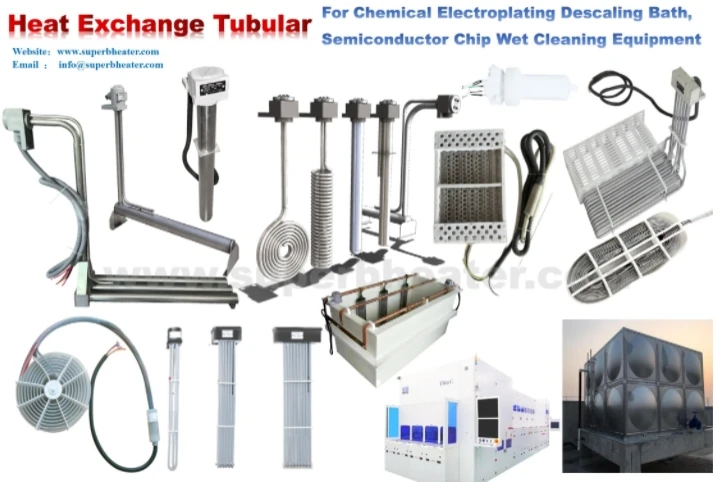
A familiar bottleneck in process operations occurs when a PTFE heat exchanger is running at full flow, yet the process fluid exits at a temperature below the desired setpoint. Production slows, product may go off-spec, and operators often suspect the exchanger is undersized or fouled. Resolving the issue requires careful analysis to determine whether the limitation lies in the unit itself, operating conditions, or the process design.
Verifying Operating Conditions
The first step in diagnosing underperformance is design verification. Actual flow rates, pressures, and inlet temperatures should be measured and compared against the exchanger's design specifications. A surprisingly common cause of low outlet temperature is simply that the flow rate is higher than anticipated. Field experience emphasizes: always verify actual flow before condemning the exchanger. Similarly, deviations in inlet temperature or thermal properties can reduce the effective heat duty.
Once measured operating conditions are confirmed to match design, the heat transfer system's performance can be evaluated more accurately. Calculating the approach temperature-the difference between the outlet of one stream and the inlet of the counterflow stream-provides insight into the exchanger's efficiency. Approach temperatures significantly higher than expected indicate potential capacity limitations or fouling.
Assessing Heat Transfer Performance
If flow and temperature conditions are within specification but the outlet remains below setpoint, fouling is a likely culprit. Deposits on tube walls, headers, or baffles reduce heat transfer, increasing thermal resistance. Fouling severity depends on fluid composition, temperature, and operational history.
Other factors influencing thermal performance include:
Flow maldistribution: Uneven flow through parallel channels can reduce the effective surface area for heat transfer.
Air or gas binding: Non-condensable gases in steam-heated exchangers or trapped air pockets can dramatically reduce thermal performance.
Bypass streams or dead zones: Leakage around tube sheets or internal bypassing may reduce heat duty.
Fluid property changes: Variations in viscosity, specific heat, or density affect heat transfer coefficients and can reduce outlet temperature.
Practical Diagnostic Steps
A methodical approach ensures reliable identification of the root cause:
Confirm flow and inlet conditions: Measure volumetric or mass flow rates and temperatures. Verify against design specifications.
Calculate approach temperature: Compare measured outlet temperatures to the design approach to gauge thermal performance.
Inspect for fouling: Visually inspect accessible headers, tube sheets, or use non-invasive techniques like pressure drop measurement to identify deposits.
Verify all tubes are active: Check for blocked or inactive tubes, particularly in multi-pass or steam-heated exchangers.
Check for non-condensable gases or air pockets: Bleed trapped gases where appropriate to restore full heat transfer.
Assess fluid properties: Confirm viscosity, density, and specific heat remain within the expected range. Variations can significantly impact duty.
Field insights reveal that non-obvious factors often cause underperformance. For example, non-condensable gas accumulation in steam-heated PTFE exchangers frequently reduces heat transfer by more than 20%, yet is easy to overlook during routine operation.
Interpreting Findings and Next Steps
Once data are collected and analyzed, the next steps depend on the diagnosis:
If flow or temperature conditions differ from design, recalculating heat duty may indicate whether the exchanger is appropriately sized or requires adjustment in process conditions.
If fouling or blockage is confirmed, cleaning or chemical treatment may restore design performance.
Persistent thermal limitations after correcting operational and fouling issues may indicate the need for exchanger modification, replacement, or upgrading to a larger capacity unit.
In practice, a systematic approach avoids unnecessary replacement. Methodical measurement and analysis provide clarity and support informed decision-making, whether the solution involves cleaning, minor modification, or full replacement.
Conclusion
When a PTFE heat exchanger fails to achieve the desired outlet temperature, the cause often lies not with the exchanger itself but with operating conditions, fouling, or process dynamics. Accurate design verification, measurement of approach temperature, and a thorough fouling assessment form the foundation of effective troubleshooting. Flow maldistribution, air binding, bypass streams, and fluid property changes must also be considered. Collecting reliable data systematically allows engineers to determine whether performance issues can be resolved with cleaning, minor adjustments, or whether more extensive modifications are required. For persistent underperformance, a detailed thermal performance analysis provides the insight needed to restore or optimize heat transfer capacity, ensuring consistent production and product quality.