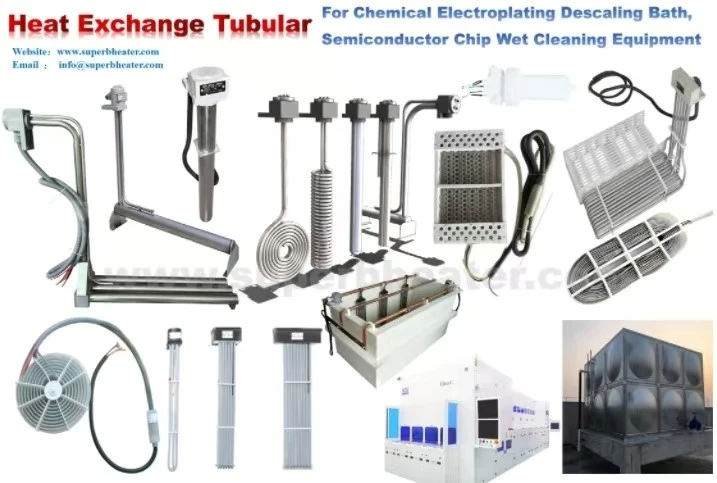
Titanium heating equipment has been widely adopted in fine chemical engineering, biopharmaceutical production, coastal wastewater treatment, petrochemical hydrogenation, cryogenic liquefied gas processing and numerous high-corrosion industrial scenarios owing to its excellent inherent corrosion resistance. Nevertheless, the previous 49 targeted anti-corrosion management measures reveal that the intrinsic anti-corrosion property of titanium materials can only function reliably under standardized whole-process control. Improper material selection, non-standard forming and welding processes, unreasonable structural design, irregular operation and maintenance, neglected environmental interference protection and incomplete idle preservation will trigger diverse localized corrosion failures including pitting corrosion, crevice corrosion, galvanic corrosion, stress corrosion cracking, erosion-corrosion, microbial corrosion, fretting corrosion and stray current corrosion, resulting in tube perforation, medium leakage, unplanned production shutdown and even major safety accidents. Constructing a standardized integrated full-lifecycle anti-corrosion management framework covering design demonstration, manufacturing process control, installation commissioning, daily operational regulation, regular predictive maintenance, long-term standby protection and final decommissioning disposal can realize closed-loop risk governance of all corrosion inducements, maximize the service life of titanium heating facilities, lower overall operation and maintenance costs, and achieve safe, stable and economical full-cycle operation of large-scale titanium heating equipment clusters.
Strict design-stage anti-corrosion demonstration and standardized structural optimization constitute the source control of lifecycle corrosion risks. Before formal equipment design, comprehensive working condition evaluation shall be carried out focusing on medium composition, chloride concentration, operating temperature and pressure, fluid flow state, vibration intensity, ambient atmospheric salinity, stray current interference and startup-shutdown thermal cycling frequency to complete material grade selection verification, galvanic compatibility assessment, stress concentration risk simulation and pipeline flow field optimization. Key anti-corrosion design measures include reasonable bending radius setting, flexible anti-vibration support layout, insulating isolation for dissimilar metal contact, upstream graded impurity filtration, reserved online monitoring sensor installation positions, drainage and surge protection configuration in stray current interference zones, as well as flange dead-zone optimization to eliminate crevice corrosion sensitive structures. Meanwhile, full-lifecycle maintenance technical specifications shall be compiled synchronously during the design phase, clarifying baseline requirements for passivation treatment, descaling cycles, inspection items and protection parameter thresholds, avoiding passive anti-corrosion rectification transformation caused by design defects after equipment put into service.
Whole-process manufacturing and installation quality supervision locks in the intrinsic anti-corrosion reliability of titanium substrates. In the raw material procurement stage, chemical composition detection, mechanical property test and impurity content inspection are mandatory to screen qualified titanium base materials and matched welding consumables; cold bending, welding, heat treatment and surface treatment processes must comply with forming specification standards to prevent residual tensile stress, surface scratches, welding metallurgical defects and passive film damage. Post-welding non-destructive testing including ultrasonic, penetrant and eddy current inspection shall cover all high-risk positions such as weld seams and bent sections, followed by standardized chemical passivation to form a dense and uniform titanium dioxide protective layer. During field installation, equipotential bonding, lightning protection grounding, insulating flange arrangement and sealing gasket matching shall be implemented strictly in accordance with anti-corrosion design drawings; transient voltage, stray current and galvanic corrosion hidden dangers shall be eliminated at the construction stage, laying a solid foundation for long-term safe operation of titanium heating assemblies.
Dynamic operational anti-corrosion regulation and predictive maintenance system realize real-time risk early warning and proactive defect elimination. After commissioning acceptance, a unique equipment full-lifecycle digital archive shall be established to record all operating parameters, medium water quality monitoring data, regular inspection results, cleaning and passivation records, accessory replacement information and fault disposal processes. Core operational management rules include staged cold startup preheating to avoid thermal shock passive film cracking, compatible scale inhibitor and biocide dosing to suppress scaling and microbial corrosion, regular salt deposition cleaning in coastal areas, periodic ultrasonic thickness detection and vibration stress relief, inert gas purging for hydrogen-rich working conditions, as well as cathodic protection parameter calibration to balance anti-corrosion effect and hydrogen embrittlement prevention. Combined with online monitoring data of dissolved oxygen, particle concentration, stray current potential and pipeline pressure, the maintenance cycle is dynamically optimized from fixed periodic maintenance to data-driven predictive maintenance, fundamentally reducing the recurrence rate of various localized corrosion failures.
Standardized standby inert preservation and environmentally friendly decommissioning disposal complete the closed-loop lifecycle anti-corrosion system. For titanium heating equipment in medium and long-term idle standby state, vacuum dehumidification plus micro-positive pressure high-purity nitrogen sealed storage shall be adopted to avoid atmospheric oxygen, moisture and salt mist contaminating the passive film; regular pressure and internal gas component inspection ensures the effectiveness of inert protection. When equipment reaches the designed service life or suffers from irreversible overall corrosion damage leading to scrapping, standardized decommissioning procedures shall be implemented: first inert gas purging and residual hazardous medium cleaning, followed by surface passivation layer and corrosion product harmless treatment, classified material recovery of titanium components, and full lifecycle archive final filing. For reusable titanium heating parts, professional defect inspection, stress relief and repassivation treatment are required before secondary application to prevent historical hidden defects from triggering repeated corrosion failures in new service environments.
The following table displays the phased core tasks and typical anti-corrosion governance objectives of the integrated full-lifecycle management framework:
表格
| Lifecycle Stage | Core Anti-Corrosion Management Tasks | Primary Corrosion Risk Control Objective |
|---|---|---|
| Design Demonstration Phase | Working condition risk evaluation, material compatibility screening, structural stress and flow field optimization, anti-corrosion standard formulation | Eliminate crevice, galvanic, thermal fatigue and erosion-corrosion hidden dangers from the design source |
| Manufacturing & Installation Phase | Raw material inspection, forming/welding process control, full-position NDT, standardized passivation, grounding and sealing construction | Avoid processing-induced micro-defects, residual stress and artificial passive film damage |
| Operational & Predictive Maintenance Phase | Online multi-parameter monitoring, regular cleaning passivation, protection parameter calibration, digital archive management, dynamic maintenance cycle optimization | Realize early warning of pitting, microbial, fretting and stray current corrosion to prevent sudden equipment failure |
| Standby Preservation & Decommissioning Phase | Nitrogen inert sealed storage, pre-restart defect inspection, harmless cleaning and classified recycling for scrapped equipment | Prevent secondary passive film failure during idle period and avoid cross-contamination from discarded corrosion products |
The integrated full-lifecycle anti-corrosion management framework integrates the 49 preceding targeted technical specifications into a systematic closed-loop governance system, breaking the limitation of single-point passive anti-corrosion maintenance. Titanium's excellent corrosion resistance is only a material-based inherent advantage; the long-term reliable service of titanium heating equipment relies on standardized whole-process constraint from design to scrapping. By implementing source design optimization, manufacturing quality control, operational dynamic supervision and end-of-life standardized disposal, all types of localized corrosion inducements can be comprehensively suppressed, the full-lifecycle economic value of anti-corrosion titanium heating facilities can be maximized, and safe, green and high-efficiency sustainable operation of industrial heating systems in various harsh corrosive environments can be guaranteed.