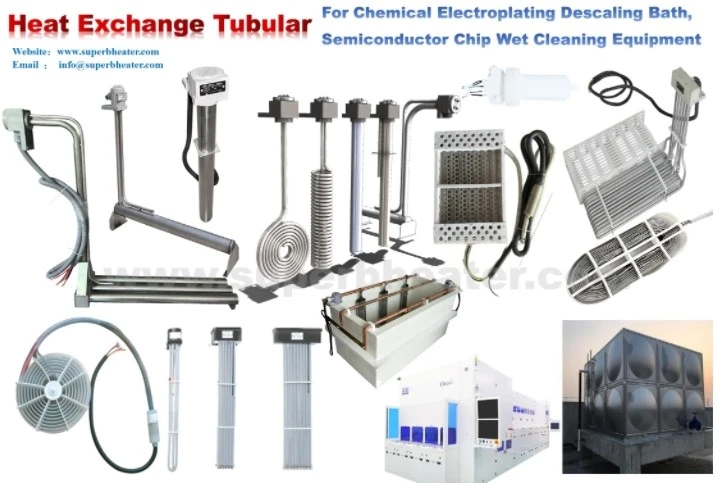
Increasing Durability Requirements in Industrial Heating Equipment
Industrial heating systems used in chemical processing, semiconductor fabrication, electroplating, and advanced materials production must operate under demanding conditions. These systems frequently function in environments where high temperatures, corrosive chemical solutions, and long operational cycles occur simultaneously.
In many facilities, immersion heaters operate continuously for extended periods with limited opportunities for maintenance. Heating equipment must therefore maintain structural integrity and stable thermal performance even after thousands of operating hours.
Chemical exposure further complicates this challenge. Industrial processing liquids may contain strong acids, oxidizing agents, and reactive electrolytes capable of degrading many conventional materials. If heating elements corrode or chemically react with these solutions, equipment lifespan may decrease and process contamination may occur.
To address these challenges, corrosion-resistant quartz heating tubes have become widely used in industrial heating systems. Their unique material properties allow them to maintain reliable performance even when exposed to harsh chemical environments for long durations.
Structural Design of Quartz Heating Tubes
Quartz heating tubes are designed with a protective multi-layer structure that separates the internal heating element from the surrounding chemical solution. At the core of the heater assembly is a resistance wire that generates thermal energy when electrical current flows through it.
This heating element is surrounded by insulating materials that provide electrical protection and guide heat flow toward the outer surface of the heater. Encasing this internal assembly is a tubular sheath constructed from fused quartz.
The quartz tube forms the external surface of the heater and directly contacts the chemical solution within the process tank. Heat produced by the internal resistance element travels through the insulation layer and quartz wall before entering the surrounding liquid.
Although the quartz sheath serves as a protective barrier, its relatively thin wall ensures that thermal energy can still transfer efficiently into the fluid. This design allows the heating element to operate safely while remaining protected from corrosive chemical exposure.
Chemical Stability of Fused Quartz
The corrosion resistance of quartz heating tubes originates from the molecular structure of fused silica. Quartz is composed primarily of silicon dioxide, a compound formed through strong covalent bonding between silicon and oxygen atoms.
These bonds create a stable three-dimensional atomic lattice that is resistant to chemical reactions with many industrial acids and oxidizing agents. Because silicon dioxide already exists in a fully oxidized state, it generally does not undergo further oxidation when exposed to reactive chemical environments.
This property makes fused quartz highly resistant to chemical degradation in industrial fluid heating systems. Solutions containing sulfuric acid, hydrochloric acid, nitric acid, and oxidizing mixtures may aggressively attack metallic materials, but quartz remains chemically stable under many of these conditions.
By preventing corrosion, quartz heating tubes eliminate the risk of metal ion release into the chemical solution. This characteristic is especially important in high-purity manufacturing environments where contamination must be avoided.
Thermal Transfer Efficiency in Quartz Heater Systems
Maintaining stable thermal performance is essential for effective industrial heating operations. In quartz heating tubes, heat generated by the internal resistance element moves outward through several layers before reaching the surrounding liquid.
The primary heat transfer pathway includes the heating element, internal insulation materials, the quartz sheath, and the process fluid. Although quartz has lower thermal conductivity than metals, efficient heat transfer can still be achieved through proper structural design.
Industrial quartz heater tubes are typically manufactured with wall thicknesses ranging from approximately 1.5 mm to 3 mm depending on tube diameter and mechanical requirements. These thin walls minimize conduction resistance and allow thermal energy to transfer effectively into the surrounding liquid.
Another factor supporting stable thermal performance is the resistance of quartz surfaces to corrosion and deposit formation. Metallic heaters operating in aggressive chemical environments may develop corrosion layers or mineral scale that act as thermal insulation.
Quartz surfaces remain smooth and chemically stable, reducing the likelihood of such deposits. As a result, quartz heating tubes maintain consistent heat transfer efficiency throughout extended operational periods.
Resistance to Thermal Shock and Temperature Cycling
Industrial heating systems often experience repeated temperature fluctuations due to process adjustments, startup procedures, or operational cycles. Materials used in heater construction must therefore tolerate thermal stress without developing structural damage.
Fused quartz exhibits exceptional resistance to thermal shock because of its extremely low coefficient of thermal expansion. The expansion rate of quartz is typically around 0.5 × 10⁻⁶ per degree Celsius, which is significantly lower than that of most engineering metals.
Because quartz expands and contracts very little when temperature changes occur, internal stresses remain relatively small even during rapid heating or cooling. This property allows quartz heating tubes to withstand repeated thermal cycles without cracking or losing structural integrity.
Such durability contributes to the long operational lifespan of quartz heating systems used in industrial processing equipment.
Industrial Applications Requiring Long-Term Heating Stability
Quartz heating tubes are widely used in industries that require both corrosion-resistant materials and reliable heating performance over long operational lifecycles. Their ability to operate in aggressive chemical environments makes them suitable for a variety of industrial systems.
| Industrial Sector | Chemical Environment | Heating Requirement | Quartz Heater Advantage |
|---|---|---|---|
| Semiconductor manufacturing | Ultra-pure oxidizing acid mixtures | Precise wafer processing temperatures | Prevents contamination |
| Electroplating systems | Acidic electrolyte solutions | Continuous bath heating | Strong corrosion resistance |
| Chemical manufacturing | Reactive liquid mixtures | Stable reaction temperatures | Chemically inert heater interface |
| Advanced materials processing | Oxidizing chemical solutions | Uniform thermal distribution | Long service life |
These applications demonstrate how quartz heating technology supports industrial systems that demand both durability and stable thermal performance.
Engineering Integration for Maximum Operational Lifespan
The reliability of quartz heating tubes depends not only on the properties of quartz but also on proper engineering integration within the heating system. Heater power density must be selected carefully to prevent excessive internal temperatures that could stress the quartz sheath.
Adequate fluid circulation within the process tank helps distribute heat evenly and prevents localized overheating. Proper flow conditions improve thermal transfer efficiency and maintain stable temperature distribution.
Mechanical support structures are often installed to protect quartz heaters from vibration or accidental impact during maintenance procedures. Because quartz is more brittle than metallic materials, minimizing mechanical stress helps maintain structural integrity.
Advanced temperature monitoring and control systems further improve heater performance by regulating power input based on real-time process conditions.
Conclusion: Long-Term Reliability in Harsh Industrial Heating Environments
Corrosion-resistant quartz heating tubes provide a highly reliable heating solution for industrial systems operating in chemically aggressive environments and continuous-duty applications. Their fused silica structure offers exceptional resistance to corrosion while preventing contamination of the process fluid.
At the same time, carefully engineered quartz sheaths enable efficient heat transfer from the internal resistance element into the surrounding liquid. Combined with strong resistance to thermal shock and surface degradation, these characteristics allow quartz heating tubes to maintain stable performance over extended industrial lifecycles.
For engineers designing modern chemical processing and precision thermal systems, quartz heating tubes remain a dependable technology capable of delivering both durability and consistent heating efficiency.