Industrial wastewater treatment systems operating under zero-liquid discharge (ZLD) requirements face some of the most punishing thermal duties in process engineering. Applications such as landfill leachate concentration, flue gas desulfurization (FGD) wastewater treatment, and complex chemical brines all share a common challenge: the need to evaporate large volumes of water from fluids that are both highly corrosive and prone to aggressive scaling.
As water is removed, salts rapidly approach saturation, precipitate, and adhere to heat transfer surfaces. Chlorides and other aggressive ions simultaneously attack exposed metals. Evaporation is inherently energy intensive, and when heat transfer surfaces foul or corrode, efficiency collapses and equipment life shortens dramatically. This leads to a fundamental question for plant designers and operators: evaporating high-salinity wastewater is thermally demanding, but what heating strategy can deliver the required energy while surviving continuous exposure to scaling and corrosion?
The Dual Failure Mechanism: Scaling and Corrosion
The difficulty of heating brine lies in the combination of two destructive mechanisms acting at once. Scaling occurs as dissolved salts exceed their solubility limits during evaporation. Minerals such as calcium sulfate, silica, or mixed salts deposit on heat transfer surfaces, forming insulating layers that reduce heat flux and raise surface temperatures.
At the same time, chloride-induced corrosion attacks metallic components. Stainless steels, copper alloys, and even high-nickel materials can suffer pitting, crevice corrosion, or stress corrosion cracking in concentrated brine environments. As fouling thickens and corrosion progresses, heat exchangers lose capacity, energy consumption rises, and the risk of sudden failure increases.
In conventional evaporator designs, these effects reinforce each other. Scale buildup traps heat, accelerating corrosion underneath deposits, while corroded surfaces promote further fouling. The result is a rapid decline in performance and frequent shutdowns for cleaning or repair.
Rethinking the Heating Surface
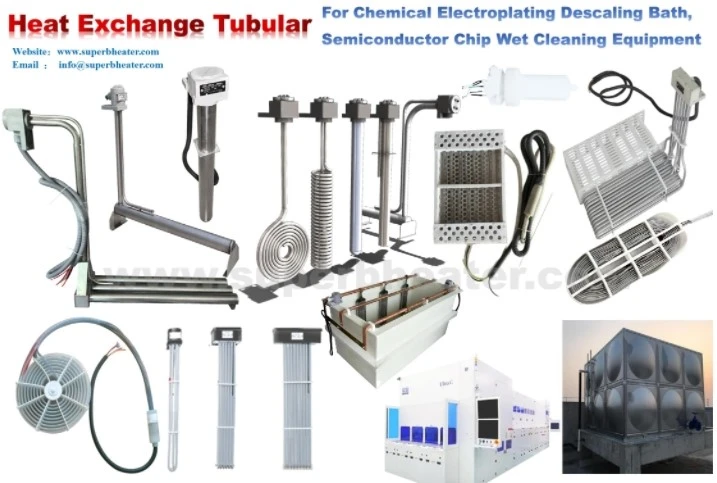
To address this problem, many modern ZLD systems are moving away from traditional metal heat transfer surfaces in the most aggressive zones. One alternative approach is the use of PTFE-clad heating panels or large-format heaters integrated into falling film or forced circulation evaporator configurations.
PTFE brings two critical properties to this duty. First, it is chemically inert to chlorides and other aggressive ions commonly found in industrial brines. Corrosion, which dictates the lifespan of metal components, is effectively removed from the equation. Second, PTFE exhibits non-stick behavior that significantly reduces the adhesion strength of scale compared to bare metal surfaces.
While scaling may still occur as salts crystallize, deposits on PTFE surfaces tend to be less tenacious and easier to remove. This leads to a more stable heat transfer coefficient over time, rather than the rapid degradation seen with conventional materials.
Integration into Evaporator Systems
PTFE-based heaters can be applied in several ways, depending on process requirements and risk tolerance. In some designs, they are used directly in contact with the process fluid, forming part of the evaporator heat transfer surface. In others, they are incorporated into a secondary loop, where the heaters warm a clean thermal fluid that then transfers heat indirectly to the brine.
The indirect approach adds complexity but offers additional protection in systems where fouling is extreme or where operational flexibility is required. Regardless of configuration, the goal is the same: maintain reliable heat input while minimizing direct exposure of critical components to scaling and corrosion.
Designing for Long-Term Operation
Successful application of PTFE-clad heating systems in brine service requires thoughtful system design. Oversizing the heating surface area is a common strategy. By operating at lower surface heat flux, the system can tolerate some degree of fouling without losing capacity or creating hot spots that accelerate deposition.
Cleaning strategies must also be considered from the outset. Although PTFE reduces scale adhesion, deposits will still form as the brine approaches crystallization. Systems should be designed for easy mechanical cleaning or effective cleaning-in-place (CIP) procedures using compatible solvents or water flushing. The smoother, non-reactive PTFE surface generally allows cleaning to restore performance more quickly than with metal exchangers.
Thermal expansion, mechanical support, and uniform flow distribution are additional considerations, particularly in large evaporators. Proper panel mounting and zoning help ensure even heat distribution and avoid localized supersaturation that can worsen scaling.
Managing Extreme Conditions Pragmatically
In ZLD applications, the heater must function as much as a scaling and corrosion management tool as a heat source. PTFE addresses both challenges passively, without relying on coatings that can fail or chemical treatments that add operating cost and complexity.
For plant engineers, the operational benefit is a heating system with more predictable behavior. A stable heat transfer coefficient over extended run times translates into consistent evaporator performance, more accurate energy balances, and fewer emergency shutdowns for de-scaling or tube replacement. This predictability is particularly valuable in facilities where downtime directly impacts regulatory compliance or disposal capacity.
Lifecycle Thinking in Brine Treatment
Heating requirements evolve as wastewater moves from dilute solution to near-saturated brine and finally to crystallization. Equipment selected for early-stage concentration may fail rapidly in later stages if materials are not chosen for the entire lifecycle of the fluid.
PTFE-based heating systems are well suited to this progression. Their resistance to corrosion does not diminish as salt concentrations rise, and their non-stick behavior remains beneficial as scaling tendencies increase. While no system is immune to fouling in crystallizer service, maintaining functionality under these conditions is the defining challenge.
Conclusion: Durable Heating for Sustainable ZLD Operation
Treating complex industrial brines demands heating equipment designed for extreme and changing conditions. Scaling and corrosion are not occasional problems in evaporators and crystallizers; they are defining characteristics of the duty.
PTFE-clad heating panels and large-format heaters offer a viable path to sustainable operation by addressing both challenges at the material level. By reducing scale adhesion and eliminating chloride corrosion, these systems support stable heat transfer, predictable performance, and longer service life. Designing such solutions is highly specialized and benefits from close collaboration between process engineers and thermal equipment specialists, but the payoff is a more reliable and resilient ZLD system.