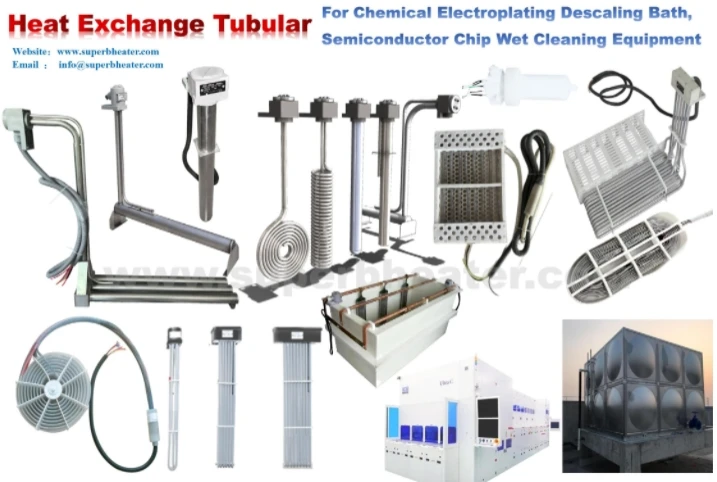
In many chemical and pharmaceutical plants, PTFE (polytetrafluoroethylene) heat exchangers are selected for their exceptional chemical resistance and thermal stability. Despite careful installation and routine operation, some units exhibit premature failure, leaving engineers puzzled. In these cases, the common factor is rarely mechanical or installation error; instead, the process environment itself imposes stresses that gradually or suddenly compromise the PTFE components. Understanding the influence of process conditions-including temperature excursions, pressure spikes, chemical concentration variations, and trace contaminants-is critical to predicting equipment lifespan and preventing repeated failures.
Temperature Excursions and Thermal Stress
Temperature is a primary factor in PTFE heat exchanger longevity. PTFE exhibits high chemical resistance up to approximately 260°C, but prolonged operation near this limit accelerates degradation. Even short-term temperature spikes can induce localized softening or micro-cracking. In practice, heat exchangers exposed to intermittent upsets-such as sudden exothermic reactions or inadequate cooling during batch operations-show stress patterns concentrated at tube bends or near inlet headers. Environmental stress due to repeated excursions can manifest as bulging tubes, crazing, or eventual rupture. Seasonal changes in ambient temperature may exacerbate these stresses, especially when cooling systems are marginally designed, resulting in higher-than-anticipated process temperatures during summer months.
Pressure Excursions and Mechanical Impact
Pressure fluctuations, including overpressure events, can mechanically compromise PTFE tubes and tube sheets. While PTFE has sufficient flexibility to tolerate moderate pressure, sudden spikes can lead to micro-tears, delamination from support structures, or even catastrophic rupture. For example, in processes with frequent pump start-stop cycles or inadvertent valve closures, localized pressure pulses often coincide with failure points observed during inspection. Correlating failure patterns with pressure monitoring logs often reveals these hidden mechanical stresses.
Chemical Concentration and Aggressive Media
The chemical environment profoundly affects PTFE durability. Chemicals generally considered benign at low concentrations may become aggressive when concentrated or combined with trace impurities. Sulfuric acid, for instance, may be compatible at 10% but can attack PTFE at higher concentrations or in the presence of oxidizing contaminants. Likewise, mixtures containing halogens or reactive intermediates can catalyze degradation even when each component alone is compatible. Historical analyses have documented cases where a process impurity present at parts-per-million levels was the sole cause of repeated PTFE heat exchanger failures. Recognizing the relationship between chemical concentration and environmental stress is therefore essential for accurate life prediction.
Trace Contaminants and Catalytic Effects
Even minimal concentrations of certain compounds, including fluorine-based chemicals or strong oxidizers, can accelerate PTFE aging. Trace contaminants may originate from upstream processes, cleaning residues, or decomposition products. In practice, failure analysis often reveals corrosion-like patterns where only a few tube sections are affected, indicating localized attack by such contaminants. Continuous monitoring and analytical testing of feed streams can help identify these hidden threats before they cause widespread damage.
Solids, Abrasives, and Erosive Wear
Solids suspended in the process fluid can also reduce PTFE lifespan through erosion, particularly near inlets, elbows, or regions of turbulent flow. Abrasive particles, even when present in small quantities, can gradually thin tube walls or compromise seals. In high-solids applications, localized thinning often precedes visible cracking, emphasizing the importance of monitoring particle load and flow characteristics. Routine inspection using non-destructive techniques can reveal early signs of erosive wear, allowing preventative action.
Monitoring and Correlating Process Conditions
Effective mitigation begins with systematic monitoring of process conditions. Temperature sensors, pressure transducers, and chemical analyzers provide data that can be correlated with failure patterns. Time-stamped logs often reveal subtle relationships-such as increased failures during specific operating regimes, seasonal trends, or after minor process excursions-that might otherwise go unnoticed. By understanding these correlations, engineers can implement operational adjustments or protective measures, such as buffer zones in temperature control, pressure relief strategies, or upstream filtration to remove solids and contaminants.
Conclusion
PTFE heat exchanger lifespan is dictated as much by environmental stress as by material properties. Temperature excursions, pressure spikes, chemical concentration variations, trace contaminants, and solids all contribute to degradation in ways that may not be immediately obvious. Accurate prediction of equipment life requires a clear understanding of the true operating environment and its dynamic variations. For processes with variable or aggressive conditions, continuous monitoring and data logging offer valuable insights into both process control and equipment longevity. By integrating these observations into maintenance and design strategies, process engineers can reduce unexpected failures, optimize performance, and extend the effective service life of PTFE heat exchangers.