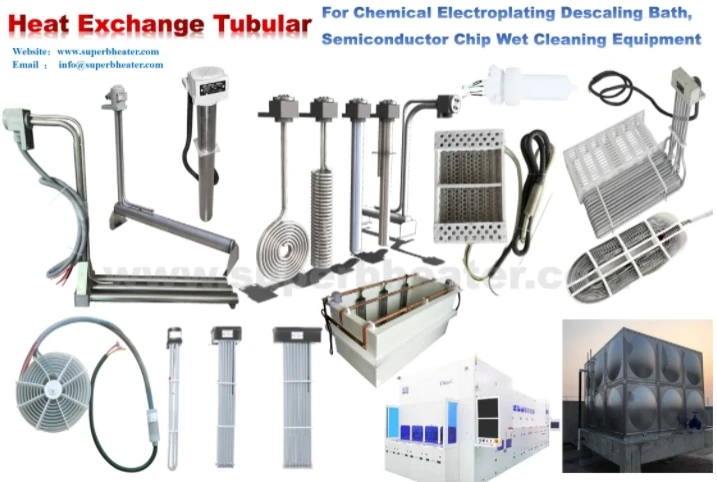
In chemical processing, electroplating, pharmaceuticals, and hydrometallurgy, heating or cooling corrosive fluids such as acids, alkalis, and solvents presents major engineering challenges. Traditional metal heat exchangers often fail due to rapid corrosion, internal leaks that cause cross-contamination, external leaks posing safety and environmental risks, and frequent fouling that reduces performance. PTFE heat exchangers, also known as Teflon heat exchangers, provide a specialized solution through indirect heat transfer using fluoropolymer tube bundles. This design completely isolates the corrosive process fluid from the heating or cooling medium, enabling safe and reliable operation. The following sections explain the core structure and working principle of PTFE heat exchangers, highlighting their value in corrosive media heat transfer.
Core Design: The PTFE Tube Bundle Assembly
The heart of a PTFE heat exchanger is the PTFE tube bundle (or Teflon tube bundle). This assembly consists of hundreds to several thousand thin-walled fluoropolymer tubes, typically 6–12 mm in diameter with wall thicknesses of 0.5–1 mm. The small diameter and thin walls maximize heat transfer surface area to compensate for PTFE's relatively low thermal conductivity (approximately 0.25 W/m·K).
Both ends of the tubes are fixed into tube sheets, forming a sealed bundle that separates two distinct flow paths: the tube side (inside the tubes) and the shell side (outside the tubes within the outer shell). The outer shell is usually made of corrosion-resistant materials such as stainless steel, polypropylene, or fiberglass-reinforced plastic, depending on the application. Process connections at the inlet and outlet allow the heating medium (steam or hot water) or cooling medium to enter one side while the corrosive process fluid flows through the other. This shell-and-tube or coil-type configuration creates a large, safe interface for heat exchange while maintaining complete physical separation between the two fluids.
The Heat Transfer Process: A Step-by-Step Breakdown
The operation follows a straightforward indirect heating mechanism driven by temperature differences:
First, the heating or cooling medium-such as steam, hot water, or chilled water-flows through the tube side. This medium serves as the source or sink of thermal energy.
Next, heat conducts through the thin PTFE tube walls. Although PTFE has modest thermal conductivity, the large collective heat transfer surface area and ultra-thin walls enable effective conduction. The heat transfer coefficient is enhanced by the high surface-to-volume ratio of the bundled tubes.
Finally, the corrosive process fluid circulates on the shell side, absorbing (or releasing) heat across the tube walls. This results in uniform heating or cooling without direct contact between the fluids. As shown in typical heat flow diagrams, heat moves solely through the temperature gradient across the tube wall, ensuring zero risk of cross-contamination.
Why This Principle Makes It Superior for Corrosive Applications
The indirect heat transfer principle delivers several critical advantages. PTFE's inherent chemical resistance protects against nearly all aggressive media, eliminating corrosion and leakage risks that plague metal exchangers. The non-stick surface provides natural anti-scaling properties, reducing fouling and maintaining stable long-term efficiency with minimal maintenance downtime.
Complete isolation guarantees no cross-contamination, making PTFE heat exchangers ideal for high-purity processes in pharmaceuticals and electronics. The design also enhances safety by preventing leaks of toxic or hazardous fluids.
Conclusion
PTFE heat exchangers achieve safe, efficient heat transfer for corrosive fluids through a simple yet robust principle: indirect conduction across a large-area PTFE tube bundle that fully isolates the two fluids. This mechanism makes them the preferred choice for strong acids, alkalis, and solvents where metal exchangers would fail quickly or introduce contamination.
For optimal performance, selection should consider specific process parameters such as media composition, temperatures, pressures, flow rates, and fouling factors. Detailed thermal calculations and customization are often required. Explore the PTFE heat exchanger product page for specifications or electroplating industry solutions for application examples.