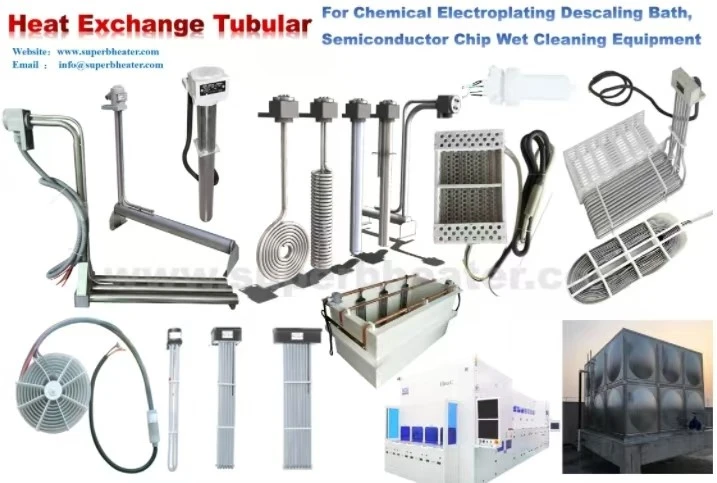
Titanium heating units are widely deployed in corrosive industrial processes for their reliable resistance to acidic, saline and organic media, yet many production facilities still adopt simple switch-type temperature control modes that trigger frequent power on and off cycles. Such crude control methods not only lead to obvious temperature fluctuations inside reaction vessels but also cause repeated thermal shocks to titanium tube surfaces, accelerating the aging of the protective passive film and pushing up long-term equipment maintenance costs. Closed-loop temperature control logics collect real-time temperature data from multiple monitoring points, dynamically adjust heating output according to temperature deviation and changing process conditions, stabilize thermal operating states, cut redundant energy consumption, and indirectly protect the anti-corrosion structure of titanium heating assemblies by eliminating extreme thermal stress caused by frequent power switching.
Conventional on-off temperature control only activates full heating power when the medium temperature falls below the lower limit and completely cuts off power once the preset upper temperature value is reached. This working mode creates a wide temperature fluctuation range, forcing titanium heating tubes to cycle between rapid high-temperature heating and sudden cooling. Each sharp temperature swing generates alternating thermal stress inside the tube wall, gradually forming microcracks on the titanium dioxide passive layer. In corrosive working environments, these tiny cracks become initiation points for pitting and crevice corrosion, shortening the service life of heating equipment significantly. Closed-loop control systems adopt proportional-integral-derivative regulation to deliver stepless power adjustment, narrowing temperature deviation within a tiny threshold and avoiding the extreme thermal impacts that damage the surface protective structure of titanium components.
Multi-point temperature sampling configuration, as a core part of mature closed-loop control logic, further optimizes energy utilization and equipment operating safety. Single-point temperature sensors often capture local temperature data that cannot reflect the overall thermal state of the entire tank, which may lead to excessive heating output to compensate for undetected low-temperature regions. Multiple distributed sensors feed comprehensive temperature information back to the control module, enabling precise power matching according to the actual average temperature of the process medium. Precise power regulation avoids unnecessary overheating, reduces heat loss to the surrounding environment, and prevents local overheating on titanium tube surfaces that would otherwise degrade the passive film and accelerate fouling accumulation. Less surface fouling not only maintains stable heat transfer efficiency but also lowers the frequency of chemical cleaning operations that carry risks of artificial passive film damage.
Feedforward compensation functions embedded in advanced closed-loop control frameworks strengthen adaptability to variable production conditions. Sudden raw material feeding, stirring speed adjustment and ambient temperature changes all disturb the thermal balance inside heating vessels. Traditional control modes require a long response period to correct temperature drift, during which excessive power input wastes energy and causes temporary local overheating. Feedforward mechanisms predict temperature variation trends based on real-time process parameters, adjusting heating power in advance to offset thermal disturbance. This proactive regulation stabilizes the surface thermal load of titanium heating tubes within a safe range, realizing coordinated optimization of energy conservation and anti-corrosion protection.
The following table lists closed-loop control configuration schemes matched with mainstream industrial heating scenarios:
表格
| Industrial Heating Scenario | Recommended Closed-Loop Temperature Control Configuration | Core Energy-Saving & Anti-Corrosion Advantage |
|---|---|---|
| Batch pharmaceutical sterile reaction heating | PID stepless regulation + multi-point temperature sampling | Eliminates frequent power switching thermal shock and stabilizes passive film integrity |
| High-chloride wastewater continuous constant temperature treatment | Basic closed-loop proportional control + temperature deviation limit setting | Avoids local overheating induced chloride pitting and reduces redundant power consumption |
| Large-volume biological fermentation heating | PID control with feedforward compensation + distributed sensor layout | Cuts overall energy waste and prevents heat-concentrated biofouling accumulation |
| Small laboratory intermittent chemical synthesis heating | Single-loop simplified PID closed-loop control | Balances control system investment and basic thermal stress protection for titanium tubes |
Closed-loop temperature control logic delivers dual value for industrial production systems: it optimizes energy utilization efficiency while serving as an indirect protective measure for titanium heating equipment. Stable thermal operating conditions preserve the compact structure of the titanium passive oxide layer, reduce the occurrence of thermal fatigue and under-deposit corrosion, and extend the service cycle of anti-corrosion heating units. Reasonable deployment of closed-loop control turns energy-saving management into equipment life-cycle protection, bringing both operational cost reduction and stable production guarantee for corrosive industrial processes.