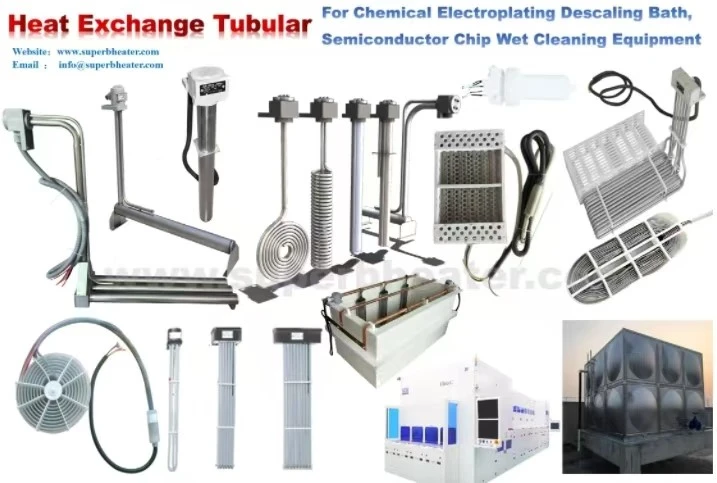
Chemical processing plants regularly experience unexpected downtime when traditional heating plates fail. Metal surfaces pit and erode within months of exposure to strong acids, concentrated alkalis, or organic solvents. Scale buildup insulates the element, bath temperatures fluctuate, and entire units require replacement, disrupting production schedules and increasing maintenance budgets. These failures occur because conventional plates depend on metal sheaths or thin coatings that aggressive chemicals degrade once heat accelerates the reaction. PTFE electric heating plates resolve this pattern by fully encapsulating the resistive element in a fluoropolymer layer that isolates it from the corrosive medium, delivering significantly higher reliability across continuous or batch operations.
PTFE, or polytetrafluoroethylene, improves equipment life through its inherent chemical protection mechanism. Carbon atoms form a strong backbone surrounded by a dense helical sheath of fluorine atoms. The carbon-fluorine bond ranks among the strongest in organic chemistry, creating a non-polar surface that repels virtually every aggressive species. Acids cannot donate protons to break bonds, alkalis cannot abstract atoms, and solvents cannot swell or dissolve the polymer. Diffusion rates stay extremely low even at continuous operating temperatures up to 260 °C, so corrosive ions remain confined to the outer surface without reaching the internal heating element. The material also exhibits zero porosity under normal pressures and maintains an exceptionally low surface energy. Precipitates and scale rarely adhere, eliminating localized concentration cells that accelerate pitting on metal plates. Uniform element spacing and consistent PTFE thickness further prevent hot spots, preserving even heat distribution and stable temperatures over thousands of operating hours.
This protection mechanism sets PTFE heating plates apart from standard electric heaters, electric floor heating systems, and wall-hung boilers in corrosive service. Standard electric heaters immerse bare metal rods or tubular elements directly in the fluid. Even high-grade alloys corrode at accelerated rates because localized hot spots intensify ion attack, and scale buildup forces higher power input that shortens element life. Electric floor heating systems circulate low-temperature water or glycol through embedded tubing in floors or panels. These designs prioritize gentle radiant output at modest velocities where corrosion seldom occurs, yet the materials lack the full inertness required for direct immersion in aggressive chemical baths. Any crossover would contaminate the heating loop without providing meaningful isolation. Wall-hung boilers manage compact water circuits optimized for space heating or domestic hot water. Their copper or stainless components perform reliably in clean, neutral fluids but would dissolve or embrittle rapidly if exposed to the acids or solvents common in processing tanks. PTFE heating plates combine direct electric conversion efficiency with complete chemical isolation, providing the reliability that standard heaters, floor systems, and wall-hung boilers cannot achieve in harsh chemical environments.
Practical advice for achieving these reliability gains begins with accurate specification. Calculate required power from tank volume, target temperature rise, wall heat losses, and agitation intensity rather than generic catalog ratings. Select watt density conservatively-typically between 1 and 5 W/cm²-to avoid localized overheating while still meeting heat-up targets. Verify full chemical compatibility with the exact bath composition, including concentration ranges, temperature swings, trace impurities, and any additives, because generic charts may overlook subtle interactions. Rigid immersion plates suit vertical tank mounting, while flexible or bonded designs work better for curved surfaces or frequent cleaning. Integrated thermocouples or RTDs placed at multiple points enable closed-loop control that maintains bath uniformity within ±1 °C and prevents over-temperature conditions that stress the coating.
Useful tips from industrial applications enhance long-term performance. Position plates to benefit from natural convection currents in agitated tanks. In static baths, multiple smaller plates often outperform a single large unit for superior temperature uniformity. Allow for thermal expansion during installation to prevent stress cracks, and incorporate cold zones above the liquid level to safeguard against dry firing. Routine infrared surface scans detect early hot spots or thinning before efficiency declines noticeably. Periodic visual inspections for discoloration or blistering keep heat transfer surfaces optimal.
Common mistakes reduce the reliability improvements buyers expect. Choosing the lowest-cost plate without confirming detailed compatibility data frequently leads to swelling or delamination within months. Oversizing watt density to achieve faster heat-up creates localized overheating that degrades the PTFE layer and shortens element life. Neglecting proper sensor placement causes controllers to monitor only one area while other sections run hotter or cooler, producing uneven heating and accelerated wear. Improper mounting that ignores thermal expansion or leaves portions of the plate exposed during operation causes stress cracks and electrical faults. Copying specifications directly from metal plates without adjusting for PTFE's lower thermal conductivity often results in undersized designs and unanticipated performance shortfalls.
In summary, PTFE electric heating plates improve reliability in chemical processing equipment by forming a molecular-level corrosion-resistant barrier that blocks chemical penetration, prevents surface damage, and maintains clean, uniform heat transfer over extended service intervals. This performance exceeds that of standard electric heaters, electric floor heating systems, and wall-hung boilers in aggressive environments. For electroplating lines, chemical etching processes, pharmaceutical reactors, or semiconductor wet stations, professional system design integrates precise fluid properties, tank geometry, duty cycles, agitation characteristics, and control strategies to create heating solutions that operate consistently and cost-effectively for years with minimal intervention.