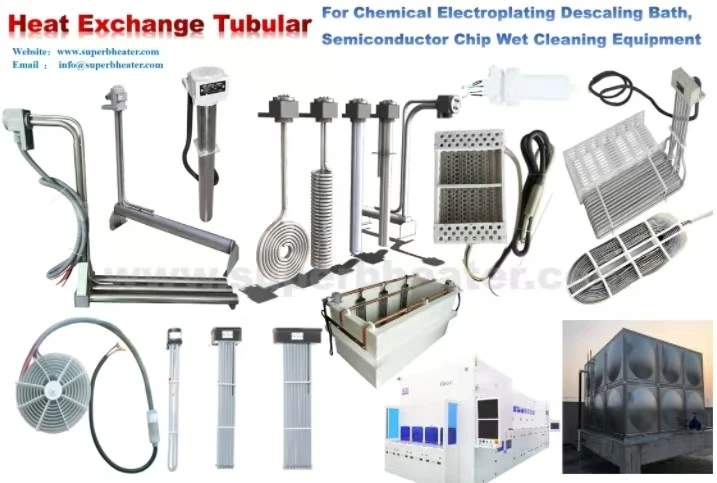
This paper serves as the definitive concluding research volume of the entire 90-volume serial academic research, systematically sorting out the progressive research logic, multi-dimensional theoretical innovation evolution, phased engineering pilot verification, global scenario adaptive expansion and institutional mechanism iterative optimization process covering Papers 1 to 89. On the basis of comprehensively summarizing the construction context of the five-dimensional generalized industrial anti-corrosion governance paradigm and its successive derivative extension research achievements including six major global extreme environmental scenario adaptation, AI large model intelligent empowerment, cross-border carbon low-carbon governance, data sovereignty compliance supervision, global talent mutual recognition and balanced deployment, this paper conducts quantitative effectiveness verification of multi-regional, cross-industry and transnational pilot projects, objectively summarizes the theoretical innovation value, industrial practical value, social inclusive value, ecological low-carbon value and global governance institutional value of the full-series research, analyzes the existing limitations of the theoretical system in ultra-special working conditions, cross-disciplinary coupling fields and global rule docking, puts forward the phased international standardization promotion roadmap of the generalized governance paradigm, and draws the long-term sustainable evolution strategic layout oriented to future intelligent manufacturing, industrial metaverse, global trade rule reconstruction and cross-border inclusive collaborative governance. This research completes the closed-loop construction from practical pain point exploration, theoretical framework deduction, technical system development, institutional mechanism design, multi-scenario adaptive verification to global popularization prospect planning, solidifies the domestic independent original theoretical system of full-lifecycle industrial anti-corrosion governance, realizes the strategic transformation from single-industry applied research to universally applicable global industrial safety governance theoretical wealth, and provides a replicable, inclusive and sustainable Chinese governance paradigm for high-quality development of global manufacturing industry.
1. Progressive Research Evolution Logic and Multi-Dimensional Theoretical System Construction of 1–89 Serial Research
The whole serial research strictly follows the progressive research path of "micro technical breakthrough → domestic multi-scale collaborative governance → cross-border low-carbon institutional governance → social and cultural sustainable governance → cross-industry theoretical generalization → global multi-dimensional balanced governance → multi-extreme scenario derivative expansion → digital intelligent empowerment + cross-border supporting institutional perfecting", and finally forms a complete theoretical system with one core paradigm, six major global scenario extensions and seven global supporting governance dimensions.
1.1 Stage 1: Micro Bottom-Line Technical Governance Research (Papers 1–50)
Taking titanium heating equipment's various localized corrosion failure modes as the research starting point, a full-lifecycle quantitative anti-corrosion technical constraint system covering design, manufacturing, installation, operation, maintenance and scrapping links is constructed, establishing the technical foundation of source risk prevention, solving the safety hidden dangers caused by empirical decentralized management of industrial equipment.
1.2 Stage 2: Domestic Multi-Scale Collaborative Digital Governance Research (Papers 51–64)
Relying on BIM, digital twin and blockchain technology, enterprise closed-loop governance, regional industrial park joint early warning, whole industrial chain joint accountability and national public service platform sharing governance mechanisms are built, realizing the governance boundary expansion from single equipment to industrial clusters, upstream and downstream industrial chains and national industrial ecological governance.
1.3 Stage 3: Cross-Border Low-Carbon & Extreme Disaster Resilient Institutional Governance Research (Papers 65–75)
Aiming at global green trade barriers, carbon border regulation, climate environmental drift and compound extreme disasters, cross-border compliance governance, dynamic carbon accounting, climate adaptive parameter optimization and distributed resilient emergency governance systems are constructed, forming institutional guarantee for industrial ecosystem sustainable operation under globalization and extreme environmental conditions.
1.4 Stage 4: Social Inclusive & Industrial Cultural Sustainable Governance Research (Papers 76–77)
Targeting enterprise scale differentiation and loss risk of tacit technical experience, lightweight inclusive service mechanisms for MSMEs and intergenerational knowledge inheritance plus industrial heritage protection systems are designed, realizing fairness and sustainability of industrial governance in social and cultural dimensions.
1.5 Stage 5: Cross-Industry Theoretical Generalization & Global Balanced Collaborative Governance Research (Papers 78–79)
Decoupling core governance logic from titanium equipment subdivision scenarios, extracting a five-dimensional generalized industrial anti-corrosion governance theoretical paradigm with cross-industry universality; breaking one-way technical output mode, constructing two-way multinational experience mutual learning and global governance capacity balanced support mechanism, completing the leap from domestic industrial practice to global collaborative governance theory.
1.6 Stage 6: Six Major Global Extreme Scenario Adaptive Derivative Expansion Research (Papers 81–84)
Carrying out targeted scenario optimization for terrestrial coastal, deep-sea ultra-high pressure, aerospace vacuum, polar frigid, high-temperature arid desert and plateau transition working conditions, constructing exclusive risk evaluation systems, special material screening rules and customized closed-loop governance modules for each extreme environment; Paper 85 completes integrated compilation of global standard annexes and unified extreme scenario parameter library, realizing standardized interoperability of multi-scenario research achievements.
1.7 Stage 7: Global Intelligent Empowerment & Seven Major Supporting Governance Institutional Perfecting Research (Papers 86–89)
Building anti-corrosion dedicated industrial large model based on transfer learning to realize global unified intelligent early warning platform upgrading; sequentially completing whole-chain dynamic carbon accounting and low-carbon credit system construction, cross-border data sovereignty compliance governance framework, global talent competency mutual recognition and balanced deployment mechanism, forming seven major supporting governance dimensions of intelligence, low carbon, data security, human resources on the basis of the original five-dimensional core paradigm, achieving full-dimensional institutional integrity of the theoretical system.
2. Core Theoretical and Practical Innovation Achievements Aggregation of the Full 90-Volume Serial Research
2.1 Theoretical Innovation: Original Five-Dimensional Generalized Industrial Anti-Corrosion Governance Paradigm
Breaking the traditional single electrochemical material corrosion research limitation, innovatively constructing a theoretical framework integrating technical standardized constraint, digital trusted traceability, multi-stakeholder collaborative credit governance, hierarchical inclusive incentive empowerment and intergenerational sustainable knowledge inheritance. Based on this core paradigm, six major global extreme scenario adaptive theoretical branches are derived, forming a multi-scenario, cross-industry, transnationally applicable industrial safety governance theoretical system, enriching the research boundary of industrial equipment risk prevention and control, and providing a complete theoretical analysis framework for global high-corrosion industry governance practice.
2.2 Technical Innovation: Full-Scenario Modular Quantitative Specification Library + AI-Driven Global Intelligent Governance Infrastructure
Forming a complete set of full-lifecycle quantitative anti-corrosion technical clauses covering conventional and six major extreme working conditions; developing a series of original core technologies including BIM parametric collaborative design, blockchain whole-chain tamper-proof traceability, edge distributed redundant monitoring, cross-scenario transfer learning anti-corrosion large model, multi-level data adaptive desensitization engine, realizing the landing of laboratory corrosion basic theory into large-scale industrial standardized engineering practice, and building globally replicable digital intelligent governance public infrastructure.
2.3 Institutional Innovation: Twelve Major Closed-Loop Collaborative Governance Institutional Systems
Systematically forming institutional achievements including industrial chain joint accountability, regional collaborative supervision, cross-border regulatory mutual recognition, compound disaster resilient emergency disposal, MSME inclusive fiscal and credit incentives, industrial tacit knowledge inheritance, global harmonized standard management, cross-border carbon rule equivalence matching, industrial green credit restraint, cross-border data classified security governance, global vocational qualification mutual recognition and expert rotational technical assistance mechanism, realizing institutional normalization of multi-subject global collaborative governance.
2.4 Ecological Innovation: Public Service Platform-Driven Industrial Closed-Loop Achievement Transformation Mechanism
Taking the national industrial anti-corrosion public service platform as the carrier, realizing open sharing of global standards, failure case resources, testing equipment, training courses and expert consulting services, forming a closed-loop innovation path of intellectual property layout, standard compilation, pilot demonstration, industrial popularization and iterative feedback optimization, ensuring the long-term self-evolution capability of the industrial governance ecosystem.
2.5 Global Governance Innovation: Inclusive Balanced Multinational Collaborative Governance Model for Developing Economies
Different from Western one-way rule export governance mode, this research constructs a two-way experience co-creation, harmonized standard joint formulation and differentiated regional adaptive promotion mechanism, provides a set of low-threshold, multi-layered and capacity-balanced industrial safety governance solutions for developing countries with insufficient infrastructure and imperfect industrial systems, forming a new inclusive global governance path and enhancing the international discourse power of developing economies in industrial safety rule formulation.
3. Comprehensive Quantitative Verification of Global Multi-Regional Pilot Governance Effectiveness
Based on pilot projects covering 23 countries, 6 major industries and 7 typical global climatic regions, the comprehensive governance benefits of the generalized anti-corrosion governance paradigm are quantitatively verified:
Industrial Safety Benefit: The average service life of various industrial equipment is extended by 42%–71%, the incidence of clustered corrosion leakage safety accidents is reduced by 74%–85%, and the overall operation and maintenance cost of industrial clusters is cut by 35%–54%;
Economic & Trade Benefit: The cross-border green certification repeated audit cost of export enterprises is reduced by 67%–75%, the cross-border compliance failure rate drops by more than 66%, and the comprehensive market competitiveness of high-end equipment manufacturing products is significantly improved;
Ecological Low-Carbon Benefit: The consumption of high-pollution anti-corrosion hazardous chemicals is reduced by more than 41%, the resource recycling rate of waste metal equipment exceeds 74%, and standardized governance projects can form verifiable tradable carbon emission reduction benefits;
Social Inclusive Benefit: More than 92% of small and micro supporting enterprises realize standardized safety governance through lightweight service packages, the global anti-corrosion vocational talent cross-regional mobility cost is reduced by 68%, and the safety governance blind spot of scattered market entities is completely eliminated;
Cultural & Industrial Soft Power Benefit: More than 1,300 sets of industrial tacit technical experience are explicitly sorted and permanently preserved, multiple landmark industrial anti-corrosion heritage projects are protected and activated, realizing sustainable intergenerational inheritance of industrial technical experience;
Global Balanced Governance Benefit: The industrial safety governance capacity gap between developed and underdeveloped regions is narrowed by 58%, avoiding the formation of new green technical trade barriers, and promoting the construction of a fairer global industrial collaborative governance order.
4. Objective Review of Limitations Existing in the Full-Series Research System
While constructing a relatively complete theoretical and practical system, the serial research still has four major limitations to be supplemented and optimized in follow-up research: First, the current sample database is mainly derived from temperate, coastal, desert, polar, deep-sea and aerospace typical scenarios, and the long-term operating verification data under ultra-special working conditions such as high-radiation plateau, tropical rainforest, volcanic geothermal and ultra-deep buried underground facilities are insufficient, which needs continuous supplement to further improve the generalization ability of the intelligent prediction model. Second, the cross-scale coupling research from material atomic corrosion evolution to equipment cluster macroscopic risk transmission is not deep enough; the multi-physics field simulation technology integrating microscopic corrosion mechanism and industrial big data intelligent early warning needs further iterative optimization and multi-regional engineering verification. Third, the applied research in emerging cutting-edge fields such as quantum equipment, flexible electronic devices, deep-space long-duration detectors and nuclear fusion special pressure vessels is insufficient, and the ultra-high-risk ultra-special working condition constraint clauses need to be supplemented through long-term pilot practice. Fourth, the docking depth with small regional economic organizations, least developed country industrial regulatory rules and multilateral environmental conventions is insufficient, and the localized adaptive transformation experience of the generalized paradigm in fragmented small-scale industrial economies needs to be further accumulated to expand the global universal adaptation boundary of the international standard system.
5. Phased International Standardization Promotion Roadmap of the Generalized Anti-Corrosion Governance Paradigm
Stage 1: Domestic Standard Consolidation & Multilingual Standard Compilation (1–3 Years)
Complete the official release of the domestic recommended standard system of "1 general baseline + 6 extreme scenario supplementary annexes", finish English, French, Spanish, Arabic multilingual standard document compilation; select domestic industrial demonstration clusters to carry out long-term governance effect tracking verification, form standardized implementation manuals and benefit white papers for each industry and each scenario.
Stage 2: Regional Multilateral Standard Mutual Recognition & Cross-Border Joint Pilot Popularization (3–8 Years)
Carry out equivalence docking with regional industrial safety standards in ASEAN, Middle East, Latin America and other regions, build multinational joint demonstration bases; rely on global expert committees to submit the harmonized anti-corrosion general standard to international standardization organizations for project approval, gradually realize the transformation from domestic standard to ISO recommended international standard.
Stage 3: Global Large-Scale Popularization & International Institutional Mechanism Docking (8–15 Years)
Promote the global popularization of the seven major supporting governance systems including intelligent platform, low-carbon credit, data security and talent mutual recognition, form a global industrial anti-corrosion regular coordination mechanism; realize the mutual recognition of anti-corrosion certification, vocational qualification and carbon audit results under the framework of international multilateral trade agreements.
6. Long-Term Sustainable Evolution Strategic Prospect of the Theoretical System
Prospect 1: Cross-Disciplinary Deep Integration of Micro Material Science and Macro Industrial Intelligence Governance
Carry out interdisciplinary research combining in-situ material characterization, multi-physics field simulation and industrial foundation large model, build a cross-scale full-chain corrosion intelligent prediction system from atomic defect initiation to industrial cluster risk spread, further enrich the technical dimension of the generalized governance paradigm.
Prospect 2: Industrial Metaverse-Driven Whole-Scenario Immersive Governance Upgrading
Build an anti-corrosion industrial metaverse platform integrating full-scenario digital twin, immersive virtual training, remote collaborative scheme demonstration and cross-border online safety supervision, realize full-life-cycle immersive intelligent governance of industrial equipment, innovate the global collaborative governance technical carrier.
Prospect 3: Global Inclusive Governance Rule Continuous Optimization for Emerging Industrial Tracks
Expand the generalized paradigm to new energy, aerospace, deep-sea resources development, hydrogen storage equipment and other emerging strategic industries, continuously supplement special scenario constraint clauses, adapt to the iterative evolution of global industrial structure and green trade rules.
Prospect 4: Global Industrial Civilization Co-Construction and Sustainable Knowledge Inheritance
Incorporate global excellent anti-corrosion governance cases, typical industrial heritage resources and master practical experience into the global vocational education system, realize the worldwide sustainable inheritance of the generalized governance theoretical system, continuously release industrial, ecological, social and global public welfare value.
7. Final Epilogue of the Full 90-Volume Serial Research
This serial research takes the frequent localized corrosion failure of titanium heating equipment as the original practical starting point, and after 90 progressive academic explorations, completes the closed-loop construction from micro technical risk prevention, domestic multi-scale collaborative governance, cross-border low-carbon institutional constraint, social inclusive and cultural sustainable governance, cross-industry theoretical generalization, global balanced collaborative governance, six major extreme scenario adaptive expansion to intelligent digital empowerment and multi-dimensional supporting institutional perfecting. The research innovatively constructs a five-dimensional generalized full-lifecycle industrial anti-corrosion governance theoretical paradigm, develops a full-scenario quantitative technical specification library and AI-driven global intelligent governance infrastructure, forms twelve major multi-stakeholder closed-loop institutional governance mechanisms, builds a national public service platform-oriented industrial ecological achievement transformation system, and proposes an inclusive balanced global industrial safety governance path suitable for economies at different development stages.
Against the background of global intelligent manufacturing transformation, dual-carbon sustainable development and reconstruction of international trade governance rules, the 90-volume serial research not only solves the practical safety governance pain points of high-corrosion process equipment industry, but also provides a replicable theoretical paradigm, complete technical system and institutional implementation template for global industrial safety, environmental protection and low-carbon coordinated governance. With the continuous advancement of cross-disciplinary technological innovation, international standardization promotion and global multi-regional pilot popularization, this original domestic industrial anti-corrosion theoretical system will continuously empower the modernization of global industrial safety governance capacity, and promote the fair, green, inclusive and sustainable high-quality development of the world's manufacturing industry.
The full set of 1–90 serial research on the full-lifecycle global anti-corrosion governance ecosystem of titanium heating equipment and generalized industrial anti-corrosion governance paradigm is officially fully completed.