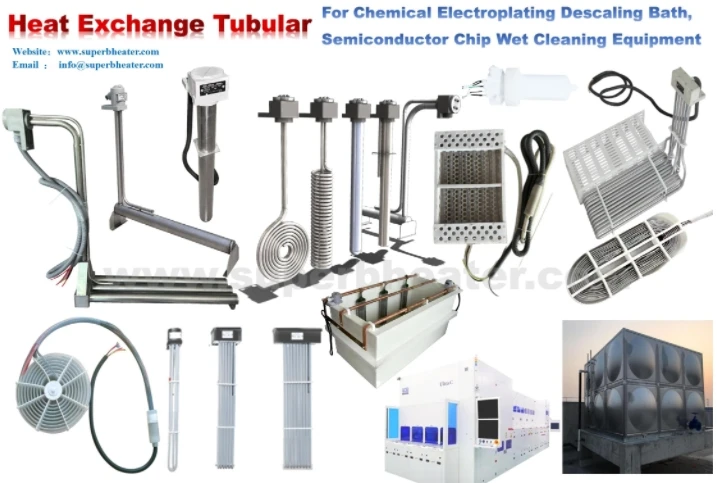
Exporting chemical processing machinery to multiple countries creates a complex electrical challenge. A single system may need to operate safely and efficiently in North America at 480 V/277 V, Europe at 400 V/230 V, Asia at 380 V/220 V, and other regions with their own standards. The PTFE immersion heaters, often a critical component, must be compatible with each destination's power supply. Specifying the wrong voltage risks immediate failure, safety hazards, or costly field modifications. Export managers need a systematic approach to voltage selection that balances technical compatibility, certification, and logistics.
Global Voltage Standards Overview
Major industrial markets operate on the following three-phase nominal voltages:
North America: 480 V / 277 V (line-to-line / line-to-neutral) or 208 V / 120 V, 60 Hz
Europe (EU harmonized): 400 V / 230 V, 50 Hz
United Kingdom: 415 V / 240 V, 50 Hz (transitioning toward 400 V / 230 V)
China and most of Asia: 380 V / 220 V, 50 Hz
Japan: 200 V / 100 V, 50/60 Hz
Middle East and parts of Latin America: 440 V or 480 V, 60 Hz
Frequency differences (50 Hz vs 60 Hz) have negligible impact on pure resistance heaters like PTFE immersion units, as they are not inductive loads. However, associated controls, fans, or pumps may require frequency compatibility.
Certification Requirements and Voltage Implications
Voltage directly influences safety certification:
UL / CSA for North America requires testing at the intended voltage (480 V or 240 V common)
CE marking for Europe demands compliance with 400 V / 230 V and the Low Voltage Directive
CCC for China, PSE for Japan, and other local marks require voltage-specific validation
A heater certified at one voltage cannot automatically be used at another without re-testing. For global shipments, suppliers often provide heaters pre-certified for multiple major markets, but this extends lead time and increases cost.
Practical Strategies for Global Compatibility
Native voltage heaters remain the most technically sound choice when:
Each destination has stable power at the required voltage
Future expansion stays within the same standard
Simplicity and minimum field modifications are prioritized
Step-down transformers are a common alternative for standardization. Designing heaters for the highest common voltage (typically 480 V) and using local autotransformers or isolation transformers simplifies manufacturing while accommodating lower-voltage markets. This approach adds transformer cost and losses (1–3%), but reduces the number of heater variants needed.
Dual-voltage designs (e.g., 230/460 V) are practical for smaller heaters (<6 kW) through series/parallel connections. Larger units become complex and expensive with this method.
In practice, designing heaters for 400 V and using autotransformers for 480 V markets is often more practical than stocking four different voltage versions. A common oversight is forgetting that European 400 V is phase-to-phase, while North American 480 V is also phase-to-phase, but grounding requirements differ. Always confirm the exact system configuration (delta or wye) with the end customer.
Conclusion
Voltage matching is not only about electrical compatibility but also about safety certification and market acceptance. The decision between 110 V, 220 V, 380 V, 440 V, or 480 V directly impacts wiring costs, installation complexity, compliance, and long-term serviceability.
For exporters, partnering with heater suppliers who have experience with global certifications and can provide appropriate documentation for each target market streamlines procurement, ensures safety, and avoids costly field modifications. Early specification of the correct voltage prevents delays and guarantees reliable operation across all destination countries.