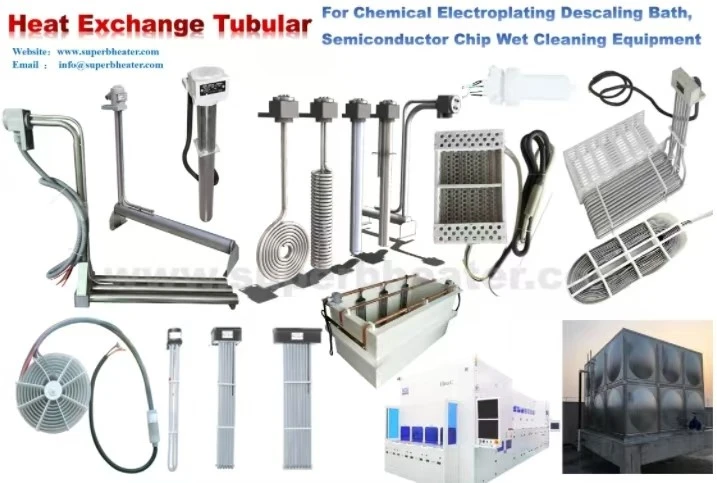
In electroplating workshops, seawater desalination units and brine constant-temperature reaction tanks, heating devices have to endure persistent erosion from massive chloride ions. Conventional metal heating pipes often suffer pitting holes and leakage within a short service period, which interrupts production and raises safety risks. Although PFA and quartz heaters can handle certain corrosive liquids, they cannot cope with high-temperature brine and chloride-containing electroplating solutions efficiently. Titanium heating tubes are tailor-made for this tough working condition, yet many factory managers hesitate to place bulk orders due to their relatively high upfront price. This article analyzes the core merits, practical drawbacks and applicable boundaries of titanium anti-corrosion heaters, with a clear table listing key indicators against three rival heating products.
The biggest competitive edge of titanium heaters lies in its self-renewing passivation film against chloride corrosion. Once titanium touches oxygen in liquid or air, a compact titanium dioxide protective layer forms instantly on the surface. If scratches or mechanical abrasions break this film during installation or operation, the material will combine with surrounding oxygen to rebuild the barrier automatically. Unlike 316 stainless steel, which merely slows down chloride corrosion by adding molybdenum and will still be penetrated by corrosive ions after months of continuous running, titanium barely reacts with dilute acid, salt brine and chloride-laden electroplating solvents, fundamentally preventing through-wall damage. Besides, titanium features low density and high structural rigidity; the tube body resists distortion under long-term fluid scouring and frequent temperature fluctuations, so the sealing structure stays intact without liquid seepage into the internal heating wire.
The following table contrasts core practical performance of four kinds of anti-corrosion heating equipment:
表格
| Heating Product | Chloride Anti-Corrosion Ability | Tolerance to Hot Concentrated Alkali | Max Sustainable Working Temperature | Self-Repair Protection | Whole Lifecycle Cost Level |
|---|---|---|---|---|---|
| Pure Titanium Heater | Top tier, no pitting corrosion | Very weak, easy to be etched | 770℃ | Available | High initial cost, low maintenance expense |
| 316 Stainless Steel Heater | Decent but limited service life | Moderate resistance | 550℃ | Not available | Low overall expenditure |
| Quartz Heater | Only acid-proof, no targeted chloride resistance | Severely corroded quickly | 1160℃ | Not available | Medium replacement cost |
| PFA Coated Heater | Good isolation effect against chloride | Strong comprehensive anti-corrosion | 240℃ | Coating cannot repair itself | Medium to high total cost |
In real manufacturing scenarios, titanium heaters bring remarkable long-term returns for electroplating assembly lines. Factories previously using 316 stainless steel heaters had to halt production for part replacement every one to two months, consuming extra labor and lowering output efficiency. After switching to titanium heating tubes, the service cycle can extend to more than three years, cutting losses caused by unexpected shutdowns and frequent component purchases. Moreover, titanium rarely dissolves metal ions into electroplating liquid, avoiding impurity contamination on workpiece plating layers and lifting the finished product's surface gloss and qualification rate significantly.
Nevertheless, inherent shortcomings restrict the wide popularization of titanium heating tubes. When soaked in heated strong alkaline solutions for a long time, the passivation film will decompose completely and lose the ability to regenerate, leading to progressive wall corrosion. Additionally, titanium smelting and precision bending procedures are complicated, pushing its unit price far above stainless steel. Deploying titanium heaters for ordinary clean water heating or weakly corrosive environments will create unnecessary financial waste for enterprises.
To sum up, titanium heating tubes dominate industrial scenes filled with chloride ions and dilute acid media, surpassing stainless steel, quartz and PFA heaters in targeted anti-corrosion capacity. Restricted by poor alkali resistance and high material cost, they cannot act as universal anti-corrosion heating accessories for all industries. Production plants ought to prioritize titanium heaters for seawater treatment, electroplating liquid heating and brine temperature control projects. For other production procedures, technicians can select stainless steel, quartz or PFA heaters in accordance with medium composition, temperature requirements and procurement budgets to maximize equipment economy and stability.